
Side Dishes
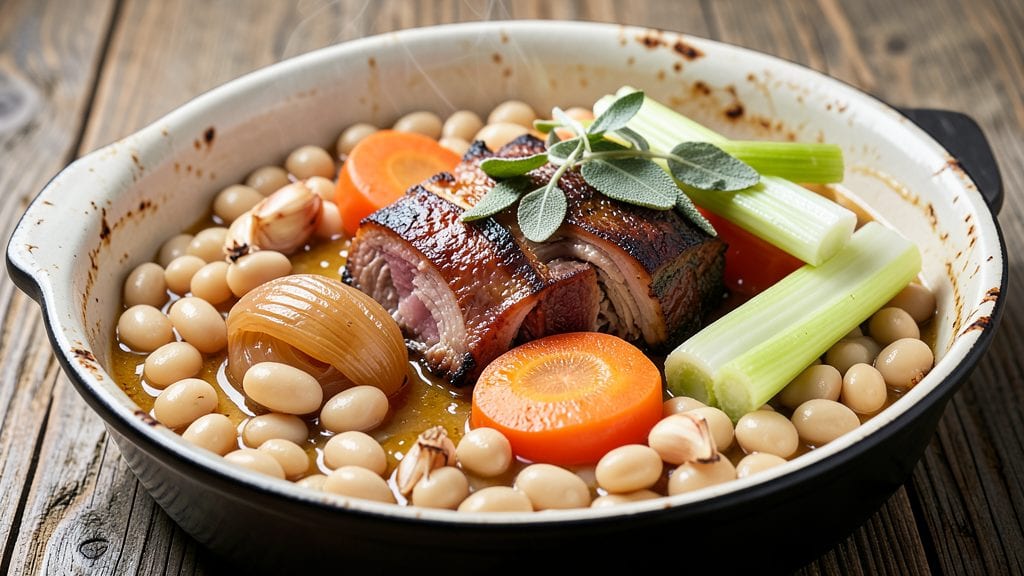
This white beans and ham hock recipe transforms humble pantry staples into a deeply satisfying, smoky-rich dish that feels like a Sunday supper—without the hours of fuss.
The secret lies in slow-braising the ham hock until it falls apart, infusing the beans with layers of savory depth while keeping the process straightforward. I developed this version during a particularly busy week when I needed comfort food that still felt special, and it’s been my go-to ever since.
The beauty of this recipe is its simplicity: no fancy techniques, just time and patience. You’ll start with dried white beans that soak overnight, then simmer with the ham hock, aromatics, and just enough broth to create a luscious, flavorful stew.
The ham hock renders its collagen into the beans, turning them into tender, melt-in-your-mouth bites with a smoky, umami-rich profile that rivals restaurant-quality dishes. What you end up with is a hearty, one-pot meal that’s perfect for feeding a family or prepping ahead for the week.
By the time you’re done, you’ll have a pot of beans so tender they practically dissolve on your tongue, all wrapped in a sauce that’s rich from the ham hock’s slow breakdown. The aroma alone—smoky, herby, and deeply comforting—will have everyone at the table asking for seconds.
Serve it with crusty bread to soak up every last drop, or pair it with a simple green salad for balance. This is the kind of dish that turns a simple weeknight into a memorable meal.
The best part? Leftovers taste even better the next day as the flavors meld further. Whether you’re cooking for a crowd or just treating yourself, this recipe delivers restaurant-quality results with minimal effort. Let’s get started—your taste buds (and your dinner guests) will thank you.
Ingredients for white beans and ham hock
Pantry staples meet smoky magic—just six ingredients transform into restaurant-worthy white beans.
| Ingredient | Amount | Notes |
|---|---|---|
| Dried White Beans 🌾 | 2 cups | Unsoaked, no need to rinse |
| Ham Hock 🍖 | 1 whole | Smoked if available, skin on |
| Yellow Onion 🧅 | 1 whole | Diced, medium size |
| Carrot 🥕 | 2 whole | Chopped, medium size |
| Celery Stalks 🌿 | 2 whole | Diced, medium size |
| Garlic Cloves 🧄 | 4 cloves | Peeled, lightly smashed |
| Bay Leaves 🍃 | 2 whole | Fresh or dried |
| Dried Thyme 🌿 | 1 tsp | Or 1 tbsp fresh |
| Black Peppercorns 🌶️ | 1 tsp | Crushed, not ground |
| Chicken Broth 💧 | 6 cups | Low-sodium preferred |
| Apple Cider Vinegar 🍎 | 1 tbsp | For brightness |
| Salt 🧂 | 1 ½ tsp | Kosher or sea salt |
| Olive Oil 🫒 | 2 tbsp | For initial sauté |
| Crusty Bread 🍞 | 6 slices | For serving |
The ham hock is non-negotiable here—it’s what turns this into a rich, umami-packed dish. Look for smoked hocks at specialty butchers or the meat department of Whole Foods or Trader Joe's. If you can only find skinless, that’s fine, but leave the skin on for extra flavor if possible. Dried beans? Great Northern or cannellini work best—they hold their shape while soaking up all that smoky goodness. Soak overnight in plenty of water (about 8 cups per 2 cups beans), then drain before cooking. No time to soak? Quick-soak method: boil for 2 minutes, then let sit off heat for an hour.
No ham hock? Substitute with a smoked turkey leg or pork shank—just increase cooking time by 30-45 minutes. Fresh thyme is ideal, but dried works at one-third the amount. The broth matters—low-sodium is key so you can control the saltiness. No vinegar? Lemon juice works too, but apple cider adds that subtle tang. For extra depth, add a 1-inch piece of kombu seaweed while simmering—it dissolves and adds umami without changing the flavor. The carrots and celery? Baby versions work fine if that’s what you’ve got.
This tastes even better the next day, so double the batch if you can. Store in the fridge for up to 5 days or freeze for 3 months. The ham hock will fall apart completely after a few hours—save those bones for broth later. For serving, toast the crusty bread with a little olive oil and garlic powder. Leftovers reheat beautifully—just add a splash of water or broth if it’s too thick. The beans get even more tender with each reheat, so don’t skip seconds.
Why You'll Love This Recipe
- One-Pot Wonder: I swear by this recipe because it’s literally one pot. Toss in the dried beans (no soaking!), ham hock, and the veggies—onion, carrot, celery—and let it simmer. No chopping boards to scrub, no extra dishes. Just flavor in a bowl.
- Smoky, Savory Magic: That ham hock? It’s the star. As it breaks down, it infuses the beans with this deep, meaty richness—like a hug in a bowl. The caramelized onion and celery add sweetness that balances it perfectly. Honestly, the first time I tasted it, I nearly burned the kitchen.
- Weeknight to Potluck: Make a big batch on Sunday, and you’ve got lunch or dinner covered all week. Or bring it to a gathering—it’s hearty enough for a crowd but still feels special. My in-laws think I’m a saint when I show up with this. (They’re not wrong.)
- Budget-Friendly Feast: Dried beans and ham hocks stretch a long way. I feed four people for under $10, and we’re all full and happy. Plus, leftovers taste even better the next day—if they last that long. My kids fight over the last spoonful.
Step-by-step instructions for white beans and ham hock
Here's how to transform simple pantry staples into a deeply flavorful, hearty dish that's easier than it looks.
Sauté the Aromatics and Ham Hock
Heat the 2 tablespoons olive oil in a large Dutch oven over medium heat. Add the 1 whole ham hock and cook for 5 minutes on each side until lightly browned. This step develops deep, smoky flavors that will infuse throughout the dish.
Remove the ham hock and set it aside. In the same pot, add the 1 whole yellow onion, 2 whole carrots, and 2 whole celery stalks, all chopped into ½-inch pieces. Cook for 8-10 minutes, stirring occasionally, until the vegetables soften and begin to caramelize. You'll notice the aromas filling your kitchen—that's when you know you're on the right track.
Add Garlic, Herbs, and Spices
Push the vegetables to one side of the pot and add the 4 cloves garlic cloves, lightly smashed. Cook for 30 seconds until fragrant—don't let them burn, or they'll turn bitter. Stir in the 1 teaspoon dried thyme, 1 teaspoon crushed black peppercorns, and 1.5 teaspoons salt, mixing well to coat the vegetables.
Return the ham hock to the pot, then pour in the 6 cups chicken broth and 1 tablespoon apple cider vinegar. Add the 2 whole bay leaves and bring everything to a gentle boil. This combination of acidity, herbs, and broth creates the perfect foundation for the beans to soak up all those rich flavors.
Simmer the Beans Until Tender
Add the 2 cups dried white beans (no need to rinse them first) to the pot. Stir gently to combine, then reduce the heat to low. Cover the pot and let it simmer for 1.5 to 2 hours, stirring occasionally, until the beans are fork-tender. You'll know they're ready when they easily mash between your fingers with just a little resistance.
If the liquid level gets too low before the beans are tender, add ½ cup hot water at a time to keep them submerged. The beans should be completely covered at all times to prevent them from sticking to the bottom and burning. This slow cooking process is what transforms tough dried beans into creamy, flavorful ones.
Shred the Ham Hock and Finish
Once the beans are tender, remove the ham hock and shred the meat using two forks. Discard the skin and any large bones, then return the shredded meat to the pot. Remove and discard the bay leaves—they've done their job and can be quite bitter if left in.
Taste the beans and adjust the seasoning if needed. The dish should be rich, slightly smoky, and well-balanced with the acidity from the vinegar. If it's too thick, add a splash of chicken broth to reach your desired consistency. Let the mixture simmer uncovered for another 5 minutes to allow any excess liquid to evaporate and the flavors to meld.
Serve with Crusty Bread
Ladle the warm bean mixture into bowls, making sure each serving gets a generous portion of the shredded ham hock. Serve immediately with 6 slices crusty bread on the side for dipping. The bread will soak up all the delicious, smoky bean broth, making every bite even more satisfying.
This dish tastes even better the next day as the flavors continue to develop, so consider making extra for leftovers. The contrast between the creamy beans, tender ham, and crispy bread creates a perfect balance that's both comforting and impressive.
Pro Tips For Making White Beans And Ham Hock
- SOAK BEANS OVERNIGHT: I learned this the hard way—rushing the soak with dried beans means tough, mealy results. Cover them in cold water by at least 3 inches, add a pinch of baking soda (trust me), and let them sit 12+ hours. No soaking? Boil them 2 minutes first, then cover for 1 hour before cooking. That extra time makes all the difference when you’re shredding the ham later.
- BLANCH HAM HOCK FIRST: Skip this, and you’ll end up with a pot of murky, off-flavored broth. Plunge the ham hock in boiling water for 3 minutes, then rinse under cold water to wash away blood and impurities. The broth will be crystal clear, and your beans will taste like they were simmered with actual ham flavor—not porky water.
- CHOP VEGETABLES UNIFORM: Big onion chunks and celery stalks won’t soften at the same rate, leaving you with a sad, half-mushy mirepoix. Dice the onion into ¼-inch pieces, slice celery into ½-inch rounds, and cut carrots into ¼-inch matchsticks. Everything cooks evenly, and the texture stays consistent—no surprises when you taste it.
- SIMMER LOW AND SLOW: High heat at the start is fine, but once the beans are tender, drop the heat to a bare simmer. I used to let mine bubble away, and the beans would split, turning the stew into a gluey mess. Keep it at a whisper—tiny bubbles, occasional swirls—and the beans stay intact, soaking up all that ham flavor like sponges. Patience here pays off.
Troubleshooting perfect results
Beans Too Hard
If your beans aren’t tender after 2 hours, they likely need more time or liquid. First, check if they’re submerged—add ½ cup hot water if needed. For stubborn beans, add 1 extra bay leaf and ½ teaspoon baking soda (it softens skins naturally).
Increase heat to medium-low and simmer another 30-45 minutes, stirring occasionally. Never rush this step—undercooked beans ruin the texture. 💡
Ham Hock Not Falling Apart
The ham hock should shred easily after 2 hours of simmering. If it’s still tough, extend cooking by 30-60 minutes—the collagen needs time to break down. For extra help, add 1 cup extra broth and a 1-inch piece of kombu seaweed (it dissolves and tenderizes).
If you’re short on time, transfer the ham hock to a slow cooker on low for 4-6 hours after initial sautéing. 🍖
Broth Too Salty
If the broth tastes overly salty, dilute it by adding ½ cup fresh water or broth and simmering for 5 minutes to balance flavors. For a quicker fix, stir in 1 tablespoon unsalted butter—it coats the taste buds and mellows saltiness.
Avoid adding raw potatoes or beans to absorb salt; they won’t work here. Taste frequently to adjust gradually. 🧂
Burnt Vegetables or Beans
Burnt aromatics or beans happen when liquid evaporates too quickly. Always keep the pot covered and maintain a gentle simmer (small bubbles, not a rolling boil). If you notice browned bits, scrape them off and add ½ cup fresh broth to deglaze.
Use a heavy-bottomed pot (like a Dutch oven) to prevent hot spots. Stir occasionally to redistribute heat evenly. ⚡
Weak or Bland Flavor
Blandness usually means insufficient acidity or herbs. Boost flavor by adding 1 extra tablespoon apple cider vinegar or lemon juice at the end. For depth, stir in 1 teaspoon fish sauce (trust me, it works!) or a pinch of smoked paprika.
If the ham hock lacks smokiness, swap it for a smoked turkey leg next time. Let the dish rest 10 minutes off heat before serving—flavors deepen during this time. 🌶️
Grainy or Chalky Texture
This happens when beans aren’t cooked long enough or lack fat. Mash ¼ of the beans with a fork to thicken the sauce, then stir back in. For creaminess, add 2 tablespoons olive oil or butter at the end.
If using canned beans, rinse them thoroughly to remove excess starch. Always use dried beans for this recipe—they absorb flavors better and avoid the chalky aftertaste. 🥄
Nutrition facts
Frequently asked questions
Can I substitute canned beans for dried in this recipe?
While you can use canned white beans, dried beans are ideal for this dish as they absorb the smoky, rich flavors better and create a creamier texture. If using canned, rinse them thoroughly to remove excess starch and reduce cooking time by 30-45 minutes. For best results, stick with dried beans—they transform into tender, melt-in-your-mouth bites that canned beans can't match.
How do I know when the ham hock is fully cooked?
The ham hock is done when it shreds easily with two forks and the meat pulls away from the bone cleanly. After 2 hours of simmering, it should fall apart effortlessly. If it’s still tough, extend cooking by 30-60 minutes or transfer to a slow cooker on low for 4-6 hours. The collagen breaks down over time, so patience is key for that perfect, tender texture.
Can I make this recipe in an Instant Pot?
Sauté the ham hock and aromatics as directed, then add all ingredients except the bay leaves. Seal and cook on high pressure for 30 minutes, followed by a 10-minute natural release. Remove the ham hock, shred it, and return it to the pot. Discard the bay leaves and adjust seasoning. The Instant Pot cuts cooking time dramatically while still delivering deep, smoky flavors.
What’s the best way to store leftovers?
Store leftovers in an airtight container in the fridge for up to 5 days or freeze for 3 months. The flavors actually improve overnight as the beans continue to absorb the smoky broth. Reheat gently on the stovetop with a splash of water or broth to restore creaminess. For extra richness, stir in a pat of butter or a drizzle of olive oil before serving.
Why does my dish taste bland even after following the recipe?
Blandness often stems from insufficient acidity or herbs. Boost flavor by adding 1 extra tablespoon apple cider vinegar or lemon juice at the end. For depth, stir in 1 teaspoon fish sauce or a pinch of smoked paprika. Let the dish rest 10 minutes off heat—flavors meld during this time. If the ham hock lacks smokiness, try a smoked turkey leg next time for extra depth.