Why I started Bean Recipes Jar
I was twenty-four, living in a studio apartment with a stove that sounded like it was about to give up at any moment, when I tried to make a simple black bean stew.
The recipe called for ‘low and slow,’ but my landlord’s stove had a mind of its own—either it was too hot or not hot enough, and by the time I realised the beans had turned to mush, the garlic was burnt to a crisp.
My roommate, who’d lent me the recipe, just sighed and said, *‘You either learn to read the stove or you’ll keep doing that.’*
That was the day I decided to write recipes that actually worked in real kitchens—not just the ones with perfect stoves or infinite patience. This site is for people who’ve stood in their own kitchens, frustrated by instructions that assume you have a commercial-grade oven or a chef’s intuition.
Here, you’ll find recipes that are tested, adjusted, and written for the stove you’ve got, not the one you wish you had.
Meet the founder

My first real kitchen was a tiny apartment with a stove that hummed louder than it cooked, and a landlord who swore he’d heard *something* burning every time I turned on the heat.
That place taught me patience—how to let flavors develop, how to taste as you go, and that even the simplest meal could feel like a celebration.
The stove was old, the pots were mismatched, and the exhaust fan barely worked, but that’s where I learned what matters: a recipe isn’t about the tools, it’s about the people you’re feeding.
I still have the wooden spoon I used back then. It’s chipped at the handle from dropping it too many times, and the bowl is stained from years of stirring sauces that refused to cooperate.
I keep it on my counter now—not because it’s fancy, but because it reminds me that the best meals don’t need perfection. Sometimes, the best part of cooking is the mess along the way.
The failure that changed everything was a batch of refried beans. I followed the recipe exactly, but the beans turned out dry and grainy instead of smooth.
My roommate took one bite, handed me the spoon, and said, *‘You’re not tasting as you go.’* That’s when I realised: recipes aren’t just about following steps. They’re about adjusting, tasting, and knowing when to walk away.
Now, every recipe here is tested until it tastes right—not just once, but twice.
I have a habit I can’t shake: I always taste everything with a pinch of salt first. Not because I think it needs it, but because salt reveals what’s really there. If the flavor is flat, the salt will show it.
If it’s already balanced, the salt won’t change a thing. It’s a habit I picked up from my grandmother, who’d say, *‘A little salt is like a truth serum for food.’* And she was right.
Meet the mascot
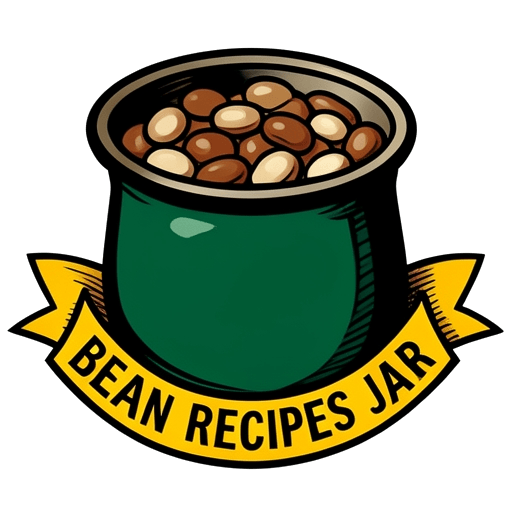
The mascot started as a quick sketch on a napkin while I was waiting for a pot of beans to simmer.
I was sitting at a café with a cracked table, and the first scribble I made was a jar with a lid that looked like it was about to pop off.
The beans inside were just a few wobbly lines, but the lid was the problem—I kept drawing it too heavy, then too light, until I realised it needed to look like it was holding something in, not just sitting there.
The next version was drawn on actual paper, this time with a pencil and a ruler for the jar’s shape. I made the lid look like it was slightly ajar, as if the recipe inside was just getting started.
The beans inside turned into little dots, not lines, and the jar got a little shadow under it to make it feel grounded. The whole thing was still too busy, though—too many details, too much going on. It needed to be simple enough to recognise at a glance.
The final version lost the shadow, simplified the lid to just a few clean lines, and turned the beans into a single, unbroken shape inside. The name came last: *Bean Recipes Jar* felt like it belonged, like it was the lid holding all the recipes together.
It’s not fancy, but it’s the face of this site—not because it’s perfect, but because it’s honest: every lid holds a recipe’s first breath.
What I promise you
This site is built on one rule: if a recipe doesn’t work in a real kitchen, it doesn’t belong here. No shortcuts, no assumptions, and no instructions that sound good in theory but fall apart in practice.
What you can hold me to
- Every recipe has been made at least twice—once by me, once by someone who isn’t a chef.
- No step is left vague. If it says ‘10 minutes,’ it means 10 minutes on a home stove, not a commercial one.
- If a recipe fails, we’ll tell you why—and how to fix it.
- The ingredients list includes what’s optional (and why) and what’s non-negotiable.
How I create a recipe
A recipe starts in the kitchen, not on paper. It begins with a question—*What am I hungry for?*—and ends when the food tastes right. The first version is always messy: too salty, too bland, or just plain wrong. But that’s the point.
The real work happens when you taste, adjust, and try again.
The first taste

The first step is always tasting as you go. If you’re sautéing onions, you taste them before they turn golden. If you’re simmering beans, you check the seasoning before they’re done.
The moment something tastes off is the moment you stop and fix it—whether that means adding salt, adjusting the heat, or starting over. Timing matters, but so does intuition. A recipe that’s ‘done’ in 20 minutes might need 30 if your stove runs hotter than the chart says.
The signs it’s gone wrong are simple: burnt garlic, grainy beans, or a sauce that’s too thick to stir. If the flavor is flat, you add acid or salt. If it’s too strong, you dilute it. Every mistake is a lesson, and every lesson makes the next recipe better.
The goal isn’t perfection—it’s balance.
The second adjustment
The second stage is where the recipe becomes real. If the beans are too dry, you add broth. If the sauce is too thin, you reduce it. This is the part where you listen to the food—does it need more time? More heat? A splash of something unexpected?
The key is patience. Rushing a recipe is how you end up with burnt edges and raw centers. The best dishes are the ones that develop slowly, where every ingredient has its moment.
The final check is always the same: does it taste like what I wanted? If not, I go back to the first step. No recipe is perfect on the first try, but every one can be fixed. That’s the difference between a good recipe and a great one.
How a page gets onto this site
Once the recipe works, I write it down while it’s still warm. The notes are messy at first—times that don’t quite add up, ingredients that seem optional, and steps that feel out of order.
The first draft is always too long, so I cut what’s unnecessary: the extra steps, the vague descriptions, anything that doesn’t help the reader. A recipe should be clear, not confusing. If it takes more than three reads to understand, it’s not ready.
Some pages get rewritten months later because a reader points out a mistake—or because I realise I missed a better way to explain something. The best recipes improve over time, not because they’re perfect, but because they’re honest. If a step doesn’t work, we say so.
If an ingredient can be swapped, we tell you why. Every page here is a work in progress, just like the meals it describes.
Write to me
I love hearing about the recipes that work—and the ones that don’t. Did a dish turn out better than you expected? Did a step go wrong in a way that surprised you? Send me your stories, your questions, and your own tweaks to the recipes here.
The contact page is the best place to reach out, and I read every message.
This site exists because cooking should be about sharing, not just following instructions. If you’ve learned something from a recipe here—or if you’ve made it your own—I’d love to hear about it. Let’s keep the conversation going.
The recipes are grouped by category: Appetizers, Beverages, Breakfast & Brunch, Desserts, Main Courses and Salads.