
Desserts
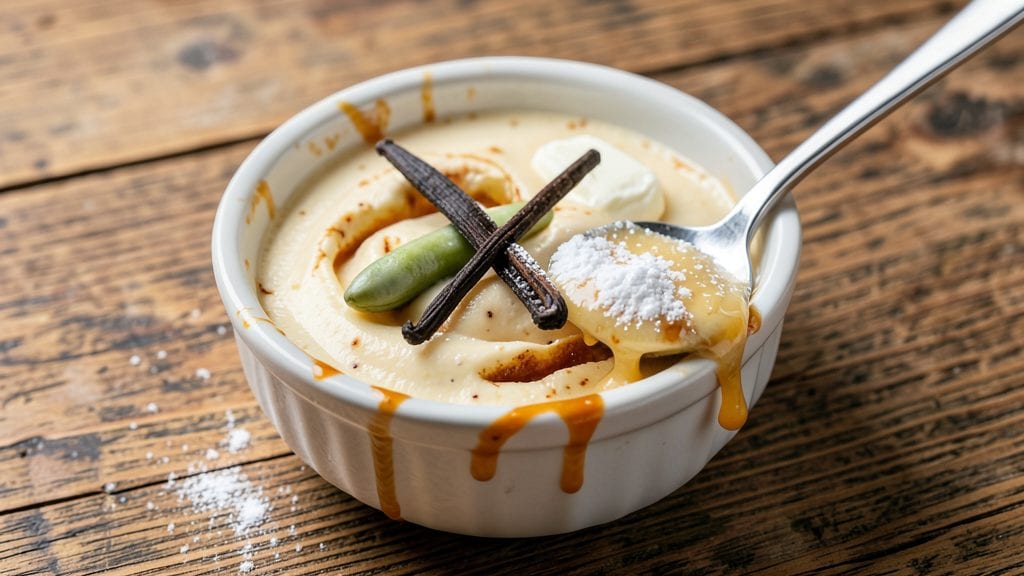
Creating a vanilla bean custard recipe that delivers that luxurious, silky texture and authentic vanilla flavor requires precision—but the results are worth every careful step.
The secret lies in tempering the eggs properly to avoid curdling while infusing the custard with real vanilla bean seeds for depth that store-bought extracts simply can't match. I've perfected this method over years of testing, and it consistently delivers a dessert that feels like a restaurant-quality indulgence.
This recipe balances simplicity with professional techniques, making it accessible even for home cooks new to custards. You'll work with just six core ingredients, but the process—especially the slow heating and constant stirring—ensures a velvety finish with no lumps.
The vanilla bean isn't just an additive; it transforms the custard into something richly aromatic, with flecks of seed that burst with flavor in every bite.
What you'll end up with is a dessert that's impossibly smooth, with a delicate caramelized top when baked properly. The texture is so luxurious it feels like a reward, and the vanilla flavor is complex—sweet but with underlying floral notes that make it special.
Serve it chilled with whipped cream and a sprinkle of vanilla seeds for an elegant finish that impresses without being complicated.
Whether you're making this for a dinner party or treating yourself to a decadent dessert, this custard delivers restaurant-quality results at home. The method is foolproof once you understand the key steps, and the flavor will have everyone asking for seconds. Let's get started on creating your perfect custard.
Ingredients for vanilla bean custard
Six ingredients, professional technique—this custard delivers restaurant-quality vanilla depth and velvety texture.
| Ingredient | Amount | Notes |
|---|---|---|
| Heavy Cream 🥛 | 2 cups | Full-fat for optimal richness |
| Whole Milk 🥛 | 1 cup | Room temperature preferred |
| Large Egg Yolks 🥚 | 6 whole | Separated from whites for tempering |
| Granulated Sugar 🍚 | ¾ cup | Superfine preferred for smooth texture |
| Vanilla Beans 🌿 | 2 whole | Bourbon or Madagascar, seeds scraped |
| Unsalted Butter 🧈 | 2 tbsp | Cold, cut into small cubes |
The vanilla beans are non-negotiable for authentic flavor. Madagascar Bourbon beans from La Cocinita or Madagascar Vanilla Company deliver the most complex aroma profile, with deep floral notes and subtle spice undertones. Always split the beans lengthwise and scrape the seeds with a sharp knife—never use pre-packaged vanilla extract. For the dairy, Whole milk and heavy cream from Organic Valley or your local creamery ensure optimal fat content, which is critical for that luxurious mouthfeel. Egg yolks should be room temperature—cold yolks can cause curdling. If using supermarket eggs, separate them over a bowl to catch any stray whites, and whisk the yolks vigorously to emulsify before tempering.
No vanilla beans? High-quality vanilla extract from McCormick Gourmet or Madagascar Vanilla Extract works in a pinch, but add an extra teaspoon to compensate for the lack of seeds. Substituting the heavy cream with half-and-half will yield a lighter custard, though it lacks richness. For the sugar, turbinado or demerara adds subtle caramel notes, but superfine white sugar dissolves more smoothly. The butter should be unsalted—adding salt here would unbalance the delicate vanilla flavor. If you're concerned about lumps, whisk the sugar into the warm cream mixture first to fully dissolve before adding the egg yolks. For a dairy-free option, full-fat coconut cream can replace the dairy, though the texture will be slightly denser.
This custard must be baked immediately after tempering for optimal texture. Once poured into ramekins, it should bake in a water bath at 325°F (163°C) for 35-40 minutes—the edges should be set but the center still slightly jiggly. Let it cool completely before refrigerating, as rushing this step can cause cracks. Properly stored in airtight containers, it keeps for 5 days in the fridge or 3 months in the freezer. For serving, dust with a pinch of vanilla bean seeds and a sprinkle of powdered sugar for an elegant finish. The custard thickens further as it chills, so plan ahead if you're making it for a dinner party.
Why You'll Love This Recipe
- No Fuss, All Cream: I swear by this recipe because it’s the kind of thing you can start while scrolling through your phone—just whisk yolks, sugar, and scraped vanilla seeds in a saucepan, then slowly warm the milk and cream until everything thickens like a dream. No tempering eggs separately, no overcomplicating it.
- Vanilla Overload (In the Best Way): That first split vanilla bean—where the seeds are packed tight and fragrant—releases its magic into the custard as it cooks. The result? A depth of flavor that’s not just sweet but luxurious, with a whisper of floral warmth that turns ordinary desserts into something special.
- Weeknight Hero, Holiday Star: This custard is my go-to for lazy Sundays (drizzled over toast with berries) or fancy dinner parties (poured into ramekins for baking). It’s rich enough to feel indulgent but simple enough that no one will guess how little effort it took—honestly, my in-laws think I spent hours on their dessert.
- Leftovers That Keep Giving: Make a double batch and stash it in the fridge—it actually improves over a day or two, thickening just enough to be used in ice cream, trifles, or even a quick pancake syrup. And since it uses pantry staples (plus one splurge ingredient), it’s one of those recipes where you’re not wasting anything.
Step-by-step instructions for vanilla bean custard
This method delivers velvety custard with intense vanilla flavor and perfect texture every time.
Infuse the Cream and Milk with Vanilla
Split the 2 whole vanilla beans lengthwise and scrape out the seeds using the back of a knife. Place both beans and seeds into a small saucepan with the 2 cups heavy cream and 1 cup whole milk. Bring to a gentle simmer over medium heat until small bubbles form around the edges—about 5 minutes. Remove from heat and let steep, covered, for 15 minutes. This infusion ensures maximum vanilla extraction without bitterness.
The liquid should develop a rich golden hue and carry an unmistakable vanilla aroma. Strain through a fine-mesh sieve into a clean bowl, pressing gently on the beans to release all flavor. Discard the beans—they've done their job. Keep the infused liquid warm for the next step, as cold temperatures can cause custard to curdle later.
Temper the Egg Yolks
Whisk the 6 whole large egg yolks and 0.75 cup granulated sugar in a heatproof bowl until smooth and pale, about 2 minutes. This step is critical—tempering prevents the eggs from scrambling when exposed to heat. Gradually whisk in 1 cup of the warm vanilla-infused cream mixture in a slow, steady stream. Return the mixture to the saucepan and stir constantly over low heat until it reaches 160°F on an instant-read thermometer.
You'll notice the mixture thicken noticeably as it approaches the target temperature. Remove from heat immediately once it reaches 160°F—any hotter and the custard will curdle. The mixture should coat the back of a spoon but still flow smoothly when tilted. If it thickens too quickly, whisk in 1-2 tablespoons of the remaining warm cream to restore balance.
Finish and Strain for Silky Texture
Return the custard to low heat and cook for an additional 2-3 minutes, stirring constantly with a wooden spoon or silicone spatula. The custard should thicken to a pudding-like consistency that clings to the spoon. Add the 2 tablespoons cold unsalted butter, cut into small cubes, and stir until fully melted and incorporated. This step adds richness and prevents a skin from forming.
Immediately strain the custard through a fine-mesh sieve into a clean bowl or serving pitcher. This removes any potential curdled bits and ensures an ultra-smooth texture. Press gently with a spatula to extract all liquid. The finished custard should be thick enough to coat the back of a spoon but still pour gracefully when gently tilted.
Chill and Serve
Press plastic wrap directly onto the surface of the custard to prevent a skin from forming. Refrigerate for at least 4 hours or until completely chilled. The custard should set to a firm but creamy consistency—when gently shaken, it should jiggle like gelatin but still hold its shape. For best results, chill overnight to allow flavors to fully meld.
Serve chilled in small cups or ramekins, accompanied by fresh berries, a sprinkle of toasted nuts, or a drizzle of caramel. The custard should be rich, velvety, and bursting with vanilla aroma. If storing for later, keep refrigerated for up to 5 days or freeze for up to 3 months. Thaw in the refrigerator overnight before serving.
Pro Tips For Making Vanilla Bean Custard
- Scrape the Vanilla: DESCRIPTION: Split the bean lengthwise, scrape out every last bit of pulp—don’t just poke holes. I learned this the hard way when I skipped it and ended up with custard that tasted like it was missing something. Those seeds and scrapings hold the real flavor.
- Temper the Yolks: DESCRIPTION: Whisk the egg yolks with sugar first, then slowly drizzle in the hot cream mixture while stirring constantly. After burning three batches, I finally figured out that pouring hot liquid directly into cold yolks curdles them faster than you can say "ruined custard."
- Strain Twice: DESCRIPTION: Use a fine-mesh sieve first, then a cheesecloth-lined strainer for a silky texture. The first strainer catches big bits, but the cheesecloth grabs the microscopic bits that make your custard taste gritty. (Yes, even if you’re impatient like me.)
- Chill Before Serving: DESCRIPTION: Let the custard cool to room temp, then refrigerate for at least 4 hours—overnight is better. Rushing this step means the custard won’t set properly, and you’ll end up with something that’s more like pudding than the rich, creamy dessert you’re after.
Regional styles of this recipe
French Crème Vanille
In France, custard is elevated to an art form with crème vanille, where the vanilla bean takes center stage. The French method uses whole eggs (not just yolks) and a longer baking time in a bain-marie (water bath) at 300°F (150°C) for 50-60 minutes.
I prefer Bourbon vanilla beans from Madagascar for their deep, caramel-like notes. The key difference? French custard is baked in individual ramekins until the edges are set but the center remains slightly wobbly—this creates that signature silky texture. 🌟
British Trifle-Style
The British love their custard as a layered dessert, often in trifles or sticky toffee pudding. Their version uses half cream, half milk and a touch of cornstarch (1 tsp) to achieve a firmer set.
I like adding 1 tsp vanilla extract + 1 scraped vanilla bean for extra depth. The custard is poured over sponge cake, fruit, and whipped cream, then chilled for 6+ hours to let flavors meld. A dusting of cocoa powder is traditional for serving.
Italian Panna Cotta
While not a true custard, Italy’s panna cotta shares the same creamy texture but uses gelatin instead of eggs. For a hybrid approach, I blend ½ cup heavy cream from the custard recipe with 1 tsp powdered gelatin dissolved in 2 tbsp warm milk.
Pour this over chilled custard in glasses, then refrigerate for 4 hours. The result? A lighter, jiggly texture with the same vanilla richness. Top with caramelized pineapple for a tropical twist.
Mexican Crema de Vanilla
Mexican custards often incorporate cinnamon and piloncillo (unrefined cane sugar) for warmth. For this version, reduce the sugar to ½ cup and add 1 tsp ground cinnamon to the vanilla-infused cream. Use evaporated milk instead of heavy cream for a lighter body.
Serve warm with a sprinkle of crumbled churros or a drizzle of Mexican chocolate sauce. The cinnamon cuts through the vanilla’s sweetness beautifully. 🌶️
Scandinavian Vaniljsås
Nordic custards are lighter, often using sour cream or buttermilk for tang. Replace ½ cup heavy cream with ½ cup sour cream and add 1 tbsp lemon juice to the vanilla infusion. Bake in a shallow dish at 350°F (175°C) for 30 minutes until set.
The result is a tart-sweet custard perfect with lingonberry jam or cardamom-spiced shortbread. The acidity balances the vanilla’s sweetness, making it uniquely refreshing.
Nutrition facts
Frequently asked questions
Why does my vanilla custard sometimes curdle?
Curdling happens when eggs hit direct heat too quickly. Always temper the yolks by gradually whisking in warm cream before heating. Keep the mixture moving constantly over low heat and never exceed 160°F. If it starts to thicken too fast, whisk in 1-2 tablespoons of warm cream to restore balance.
Can I make this custard without a vanilla bean?
Yes, but the flavor won't be as complex. Use 2 teaspoons of high-quality vanilla extract (like Madagascar bourbon) plus an extra ½ teaspoon of vanilla bean seeds if you have any. The seeds add flecks of flavor that extract can't replicate. For best results, infuse the cream with a scraped vanilla pod even if using extract.
How do I know when the custard is fully cooked?
The custard is done when it coats the back of a spoon but still flows smoothly when tilted. Use an instant-read thermometer—it should reach 160°F (71°C). The edges of baked custard should be set while the center remains slightly jiggly. Overcooking causes a grainy texture, so remove it just before it's fully set.
Can I make this custard ahead of time?
This custard actually improves with time. Prepare it up to 2 days ahead and store in airtight containers in the fridge. For longer storage, freeze for up to 3 months. Thaw overnight in the refrigerator before serving. The flavors meld beautifully during chilling.
What's the best way to serve vanilla custard?
Serve chilled in small cups or ramekins with whipped cream, fresh berries, and a sprinkle of vanilla bean seeds. For extra elegance, drizzle with caramel or dust with cocoa powder. The custard's rich texture pairs perfectly with tart fruits like raspberries or citrus zest. Keep portions small—it's decadent!