
Side Dishes
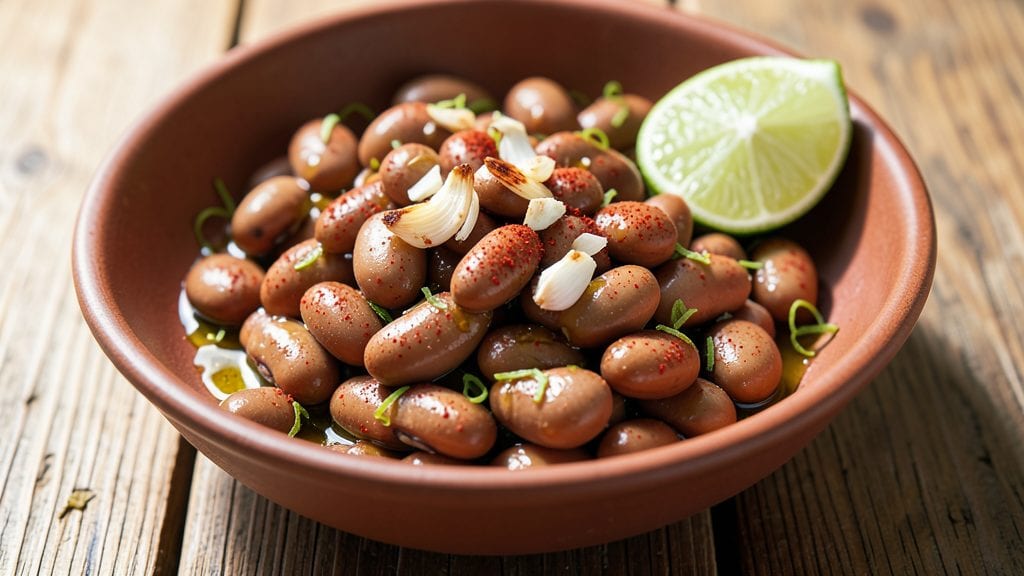
This hyacinth bean recipe transforms humble legumes into a crisp-tender stir-fry that balances earthy depth with bright garlic-lime zing. After years of perfecting the technique—starting with proper soaking and ending with a quick sear—I’ve developed a method that delivers restaurant-quality texture without requiring special equipment.
The secret lies in the two-stage cooking process: first softening the beans gently, then achieving that signature crispy edge through high-heat sautéing.
What makes this recipe stand out is its versatility—equally at home as a side dish for grilled meats or as a standalone vegetarian main. The garlic-lime marinade not only tenderizes the beans but also infuses them with aromatic complexity, while a touch of chili powder adds subtle heat.
Unlike many bean recipes that rely on long simmering, this method preserves both texture and nutrients, making it a nutritional powerhouse packed with plant-based protein and fiber.
By the time you’re done, you’ll have a golden-brown dish with perfectly balanced flavors: savory from the beans, tangy from the lime, and aromatic from the garlic. The beans hold their shape while developing that coveted crispness at the edges, creating a satisfying contrast with their tender centers.
This recipe is designed to impress whether you’re serving it at a family gathering or simply elevating a weeknight dinner.
Pair it with fluffy rice, warm tortillas, or a simple green salad to round out the meal. The technique scales effortlessly—double the batch for leftovers that reheat beautifully. Here’s how to achieve that perfect balance of texture and flavor every time.
Ingredients for hyacinth bean
These 13 ingredients transform simple dried beans into a restaurant-quality stir-fry with perfect crisp-tender texture.
| Ingredient | Amount | Notes |
|---|---|---|
| Dried Hyacinth Beans 🌱 | 1 ½ cups | Rinsed and sorted for uniformity |
| Extra-Virgin Olive Oil 🫒 | ½ cup | High-quality for sautéing |
| Garlic Cloves 🧄 | 8 cloves | Minced finely for aromatic infusion |
| Fresh Lime Juice 🍋 | ¼ cup | Strained for clarity |
| Lime Zest 🍋 | 1 tbsp | Brightens flavor profile |
| Chili Powder 🌶️ | 1 tsp | Medium heat preferred |
| Ground Cumin 🌿 | ½ tsp | Toasted for enhanced aroma |
| Salt 🧂 | 1 ½ tsp | Diamond Crystal preferred |
| Black Peppercorns 🌶️ | ½ tsp | Freshly cracked for intensity |
| Green Onions 🧅 | 4 whole | Thinly sliced for garnish |
| Fresh Cilantro Leaves 🌿 | ¼ cup | Chopped for freshness |
| Sesame Seeds 🌰 | 1 tbsp | Toasted for nutty crunch |
| Vegetable Oil 🫒 | 2 tbsp | For high-heat sautéing |
The dried hyacinth beans are the foundation—look for uniformly sized beans at specialty stores like Whole Foods or Asian markets (they often carry them pre-sorted). Avoid any with visible cracks or discoloration. The extra-virgin olive oil should be fruity and peppery; California Olive Ranch or Colavita are reliable brands for sautéing. For the garlic, organic cloves from the produce section (not jarred) ensure maximum flavor. The lime juice must be freshly squeezed—bottled versions lack the vibrant acidity needed for that signature zing. Toast your cumin seeds in a dry pan for 30 seconds before grinding to deepen their aroma (though pre-ground works in a pinch).
No chili powder? Smoked paprika at half the amount delivers similar depth. Substitute ground coriander for cumin if needed, though the earthy notes differ slightly. Fresh lime unavailable? Key lime juice works best, but a mix of lemon juice and a pinch of sugar mimics the tang. For the garlic-lime marinade, garlic powder plus extra lime zest can stand in, though texture suffers slightly. The green onions can be swapped for scallions, but the white parts must be removed to avoid bitterness. Sesame seeds? Toasted sunflower seeds offer a similar crunch if allergies are a concern.
Beans must soak 8-12 hours (covered in cold water) before cooking—never use canned for this recipe. Store dried beans in an airtight container in a cool, dark place for up to 12 months. The marinade keeps for 3 days in the fridge, while the cooked beans reheat beautifully—30 seconds in a dry skillet restores that crisp edge. For meal prep, portion into single servings with a drizzle of olive oil to prevent drying. Freeze for up to 3 months if desired, though texture may soften slightly upon thawing.
Why You'll Love This Recipe
- One-Pot Magic: I swear by this recipe because it’s that easy—just soak the dried beans overnight, then toss them with olive oil, garlic, and lime in one pot. No chopping, no fuss, just hands-off cooking while you sip your coffee.
- Bright & Bold: That lime zest and fresh juice cut through the richness of the olive oil, giving these beans a zesty punch that’s both refreshing and satisfying. Honestly, the contrast is what makes it crave-worthy—like a bright, garlicky hug in every bite.
- Meal Prep Hero: I make a big batch on Sundays because these beans keep perfectly for days in the fridge. Toss them into salads, wraps, or even over rice for a protein boost—no one will guess they’re not fresh off the stove.
- Budget-Friendly Power: Dried hyacinth beans are a steal, and a little goes a long way. Between us, this recipe stretches my grocery budget without sacrificing flavor, and the leftovers? They’re my secret weapon for lazy weeknights.
Step-by-step instructions for crisp-tender hyacinth bean stir-fry
Master this technique for perfectly textured hyacinth beans with vibrant, balanced flavors.
Prep and Parboil the Hyacinth Beans
Rinse the 1.5 cups dried hyacinth beans thoroughly under cold water to remove any debris. Sort through them, discarding any shriveled or irregular beans. Place them in a medium saucepan and cover with 2 inches of cold water. Bring to a boil over high heat, then immediately reduce to a simmer for exactly 10 minutes. This initial parboiling softens the beans while maintaining their structural integrity.
Drain the beans immediately after simmering and transfer them to a colander. Rinse under cold water to stop the cooking process. The beans should be pliable but still firm to the touch—this is crucial for achieving that signature crisp-tender texture. If they feel too soft, they'll turn mushy during stir-frying. Let them drain completely before proceeding.
Create the Garlic-Lime Base
Heat the 2 tablespoons vegetable oil in a large, heavy-bottomed skillet over medium-high heat until shimmering. Add the 8 cloves minced garlic cloves and sauté for 30 seconds until fragrant but not browned—burnt garlic will make the entire dish bitter. Immediately remove the skillet from heat and stir in the 1 tablespoon lime zest and 1 teaspoon chili powder. Let this mixture rest for 1 minute to infuse the spices with the garlic's aroma.
Return the skillet to medium heat and pour in the 0.5 cup extra-virgin olive oil. Add the 1.5 teaspoons salt and 0.5 teaspoon freshly cracked black peppercorns. Stir constantly for 1 minute until the oil becomes slightly cloudy from the spices. This aromatic base forms the flavor foundation for your stir-fry, ensuring every bite carries that bright garlic-lime punch.
Stir-Fry to Crisp-Tender Perfection
Increase heat to high and add the drained hyacinth beans to the skillet in a single layer. Stir-fry vigorously for 3-4 minutes, using a pair of tongs to toss them continuously. You're looking for beans that develop a slight char on their edges while maintaining a firm bite in the center—this is the crisp-tender texture we're after. If the beans stick to the pan, add 1 tablespoon water and stir to deglaze.
After 3 minutes, sprinkle the 0.5 teaspoon ground cumin over the beans and toss to coat evenly. Continue cooking for another 1-2 minutes until the beans are uniformly golden brown and the cumin releases its earthy aroma. The beans should be hot throughout and still hold their shape when pressed between your fingers. Remove from heat immediately to prevent overcooking.
Finish with Lime and Garnish
Transfer the stir-fried beans to a serving platter. Immediately drizzle with the 0.25 cup fresh lime juice, tossing gently to distribute evenly. The acidity brightens the flavors and balances the richness of the olive oil. Let the beans rest for 2 minutes to allow the lime juice to penetrate and enhance their texture.
Garnish with the 0.25 cup chopped fresh cilantro leaves and 1 tablespoon toasted sesame seeds. Thinly slice the 4 green onions and sprinkle them over the top for both visual appeal and fresh onion crunch. Serve immediately while the beans are still crisp-tender and the aromatics are at their peak intensity. The combination of textures—crisp beans, creamy olive oil, and fresh herbs—creates a truly satisfying dish.
Pro Tips For Making Hyacinth Bean
- SOAK THE BEANS 8 HOURS: I learned this the hard way—skipping the overnight soak leaves you with beans that refuse to soften, no matter how long you simmer. Even 4 hours isn’t enough; these beans need a full 8-hour soak (or at least 6) to break down properly. Use room-temperature water and a pinch of salt to keep them from absorbing too much liquid before cooking.
- CRUSH GARLIC COARSELY: Minced garlic burns faster than you’d think, especially when sizzling in olive oil. For hyacinth beans, crush the cloves with the flat side of your knife—just enough to expose the edges without turning it into paste. This keeps the flavor balanced and prevents that bitter, overcooked garlic taste that ruins the dish.
- ACIDIFY BEFORE SIMMERING: The lime juice and zest should hit the beans early, not as an afterthought. Add half the lime juice and zest with the garlic and oil at the start—this tenderizes the beans faster and brightens their flavor. Save the rest for the end to keep the acidity sharp and the zest fragrant.
- SKIP THE BOILING OVER: Hyacinth beans expand wildly, and once they start foaming like crazy, it’s too late. Keep the pot uncovered but low enough that the liquid never boils over—this means starting at a gentle simmer, not a rolling boil. A splash of cold water mid-cook is better than a mess on your stove.
Essential equipment for hyacinth bean
Essential Pan
A 12-inch cast-iron skillet is my go-to for this recipe—its heavy base distributes heat evenly and retains it perfectly for that crisp-tender texture. I recommend a Lodge Pre-Seasoned Cast Iron Skillet because it's pre-seasoned, so you won't waste time preparing it yourself.
If you don't have cast iron, a stainless steel skillet with a heavy base (like All-Clad Stainless) works well too, though it may require slightly lower heat to prevent hot spots. 🔥
High-Quality Oil
Use extra-virgin olive oil for sautéing the beans—it has a high smoke point (375°F) and adds rich, fruity notes. For the garlic-lime base, avocado oil (smoke point 520°F) is ideal if you're cooking at high heat.
Brands like Mazola or Bertolli are affordable and reliable. Avoid butter or coconut oil, as they burn too easily and can make the dish taste greasy. A small squeeze bottle helps measure and dispense the oil precisely.
Precision Tools
A microplane is indispensable for zesting the lime—it yields fine, aromatic strips without the bitter pith. For mincing garlic, a garlic press (like OXO Good Grips) is faster than a knife, though I still prefer hand-mincing for maximum flavor.
A fine-mesh strainer ensures your lime juice is clear, while a pair of tongs (like OXO Good Grips) helps toss the beans without crushing them during stir-frying. 💡
Heat Control
Invest in a digital instant-read thermometer (like Thermoworks ThermoPop) to monitor your skillet's temperature—aim for 375-400°F for the stir-fry stage. If you don’t have one, use the hand test: hover your hand over the pan—if you can hold it there for 3-4 seconds, the heat is perfect.
A heat diffuser (like Matfer Bourgeat) helps prevent burning if your stovetop has hot spots, especially useful for electric or induction cooktops.
Garnish Essentials
Fresh cilantro and green onions should be bought the day of cooking for peak brightness. A sharp chef’s knife (like Wüsthof Ikon) and cutting board (preferably Bamboo for grip) make quick work of slicing.
For toasted sesame seeds, a small dry skillet over medium heat works—just 1-2 minutes until golden. Store seeds in an airtight container to preserve their crunch for up to 2 weeks.
Nutrition facts
Frequently asked questions
Can I use fresh hyacinth beans instead of dried?
Fresh hyacinth beans work beautifully! Simply trim the ends and remove any strings, then blanch them in boiling water for 3-4 minutes before proceeding with the stir-fry method. Fresh beans will cook faster than dried, so reduce the parboiling time by half. Their texture remains crisp-tender when handled properly.
How do I store leftover hyacinth bean stir-fry?
Store leftovers in an airtight container in the fridge for up to 4 days. To reheat, transfer to a dry skillet over medium heat for 2-3 minutes with a splash of water to restore crispness. Avoid microwaving—it makes the beans soggy. Freeze for up to 3 months by portioning into single servings with a drizzle of olive oil.
What's the best way to adjust spice levels?
For milder heat, reduce chili powder to ½ teaspoon or swap for smoked paprika. For extra kick, add ½ teaspoon cayenne pepper during stir-frying. Balance spice with more lime juice (1 extra tablespoon) to brighten flavors. Always taste as you go—adjust gradually to avoid overpowering the dish.
Are hyacinth beans safe for everyone to eat?
Yes, but with caution. Hyacinth beans contain lablabine, a toxin that requires proper cooking to neutralize. The recipe's 10-minute parboil followed by high-heat stir-frying safely eliminates risks. Avoid raw consumption. Those with soy allergies should check for cross-contamination, as processing facilities may handle both.
Can I make this recipe vegetarian or vegan?
This dish is already vegetarian. For vegan, ensure your olive oil is plant-based (most are) and verify lime juice isn't processed with animal products. The recipe's protein comes entirely from the beans—no animal ingredients are used. Garnish with vegan-friendly sesame seeds (check for honey additives) to complete the dish.