
Side Dishes
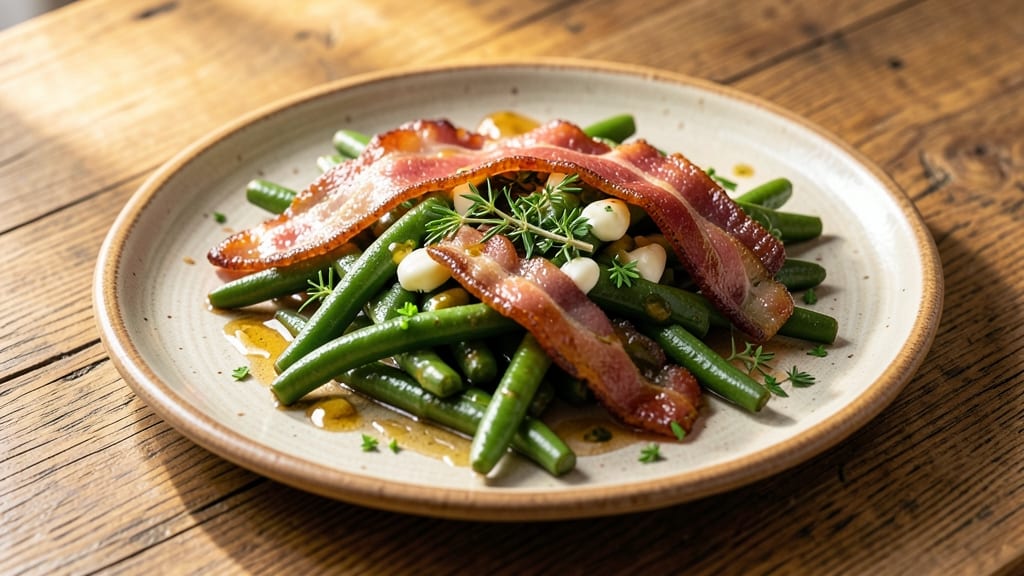
This German green beans recipe delivers the crisp-tender texture and smoky depth that makes Grüne Bohnen mit Speck a staple at German tables. The secret lies in crisping thick-cut bacon until it's perfectly rendered, then tossing it with fresh green beans until they reach that signature tender-crisp stage.
I first discovered this dish while visiting Bavaria, where it's traditionally served as a hearty side dish alongside sausages or roasted meats.
The preparation is straightforward but requires attention to timing—bacon should be cooked until crispy, not greasy, and the beans must be blanched just long enough to soften slightly while retaining their vibrant green color.
A splash of apple cider vinegar brightens the dish, cutting through the richness of the bacon while enhancing the beans' natural sweetness. This method transforms simple green beans into a restaurant-quality side that pairs beautifully with pork or potatoes.
What you'll end up with is a dish that's both rustic and refined—crispy bacon bits scattered throughout tender green beans, all finished with a touch of vinegar and fresh herbs.
The aroma alone will have your kitchen smelling like a German countryside tavern, and the contrast of textures makes every bite satisfying. This recipe serves 4 as a side, though it's substantial enough to be a light main course when paired with crusty bread.
German cuisine often gets overlooked in favor of heavier dishes, but this recipe proves how fresh vegetables can shine with the right technique. The balance of smoky, tangy, and fresh flavors makes it versatile enough for weeknight dinners or holiday feasts.
Let's get started on creating this classic side dish that brings a taste of Germany to your table.
Ingredients for german green bean
Fresh green beans, crispy bacon, and aromatic herbs create this authentic German side dish.
| Ingredient | Amount | Notes |
|---|---|---|
| Fresh Green Beans 🥦 | 1 ½ lb | Trimmed and ends snapped off |
| Thick-Cut Bacon 🥓 | 6 oz | Thick-cut for crispiness (not pre-cooked) |
| Unsalted Butter 🧈 | 2 tbsp | For crisping bacon and beans |
| Apple Cider Vinegar 🍏 | 1 tbsp | For tangy brightness (not white vinegar) |
| Fresh Thyme Leaves 🌿 | ¼ cup | Chopped, stems removed (or 1 tsp dried) |
| Fresh Parsley Leaves 🌱 | ⅛ cup | Chopped for garnish (optional) |
| Salt 🧂 | 1 tsp | Kosher or sea salt (not table salt) |
| Black Pepper 🌶️ | ½ tsp | Freshly cracked preferred |
| Granulated Sugar 🍬 | ½ tsp | Balances acidity (optional) |
| Garlic Cloves 🧄 | 2 cloves | Minced, for finishing (optional) |
The bacon is non-negotiable for that authentic Speck flavor. Thick-cut, center-cut bacon from Oscar Mayer or Applegate delivers the best texture—thin bacon burns before it crisps. Look for packages labeled 'thick-cut' or 'center-cut' at your grocery store's meat counter. Fresh green beans should be vibrant, not limp. Trader Joe's or Whole Foods often carry the best quality, but any fresh green beans work. Avoid wax beans—they're tougher and less flavorful. The thyme and parsley should be fresh, not dried, for that bright German herb profile.
No thick-cut bacon? Regular bacon cut into large pieces works in a pinch, but it won't be as crispy. Substitute apple cider vinegar with white wine vinegar at half the amount, though it won't be as authentic. Dried thyme can replace fresh at one-third the amount, but fresh is preferred. The sugar is optional but balances the vinegar beautifully—skip it if you're avoiding added sugar. Garlic adds depth, but traditional recipes often omit it. For a vegetarian version, swap bacon for smoked paprika and extra butter (1 tsp paprika + 1 extra tbsp butter).
Fresh green beans keep for 5-7 days in the fridge, but use them within 2 days for peak crispness. Bacon can be cooked ahead and stored in the fridge for up to 1 week, though it loses some crispness. This dish reheats beautifully—just add a splash of water or vinegar to revive crispness. Portion leftovers into containers with bacon on top to maintain presentation. The flavors actually improve the next day as the vinegar mellows and the bacon softens slightly.
Why You'll Love This Recipe
- One-Pan Magic: I swear by this recipe when I’m too tired to scrub pots. Toss the green beans and bacon on a sheet pan, roast together, then finish with butter and vinegar—no chopping, no fuss. The bacon renders its own crispy blanket over everything, and the thyme leaves just wilt right into the mix.
- Crispy-Creamy Balance: That first bite of buttery green beans with bacon’s smoky crunch? It’s the kind of contrast that makes you pause mid-fork. The apple cider vinegar cuts through the richness, and the thyme adds this earthy brightness—like a hug for your taste buds. (Yes, even on a Tuesday night.)
- Meal Prep Secret Weapon: Between us, this is my go-to for lunches all week. The flavors only get better after a day or two in the fridge—bacon stays crispy, beans stay tender. Pack it cold for work or reheat it for a quick dinner. My daughter picks out the bacon bits first, but still asks for seconds.
- Budget-Friendly Luxury: Fresh green beans might sound fancy, but here’s the thing: this recipe stretches a little bacon and a handful of herbs into something that feels special. No fancy ingredients, just smart layering. Honestly, it’s the kind of dish that makes you feel like you’re treating yourself without breaking the bank.
Step-by-step instructions for crisp-tender green beans with smoky bacon bits
This German-inspired method delivers perfectly tender green beans with crispy bacon and aromatic herbs.
Prepare the Green Beans and Cook the Bacon
Trim the ends off the 1.5 lb fresh green beans and snap them in half if they're particularly long. Set aside. In a large skillet, cook the 6 oz thick-cut bacon over medium heat until the edges become crispy and the fat begins to render out—about 8-10 minutes. I like to press down gently on the bacon slices during the first 3 minutes to prevent curling and ensure even contact with the pan.
Once the bacon is about 75% cooked, remove it from the skillet with a slotted spoon and set it on a paper towel-lined plate. Leave the rendered bacon fat in the skillet—this golden liquid is packed with flavor and will crisp the green beans beautifully. Use two forks to break the bacon into bite-sized pieces and set aside for later.
Sauté the Green Beans in Bacon Fat
Add the 2 tbsp unsalted butter to the skillet with the remaining bacon fat and heat over medium-high heat until the butter melts and begins to foam. Add the trimmed green beans in a single layer, stirring gently to coat them evenly in the fat. Cook for 5-6 minutes, stirring occasionally, until the green beans begin to soften slightly at the edges but remain crisp in the center.
This is where the magic happens—the combination of bacon fat and butter creates a perfect balance of richness and crispness. You'll know they're ready when you can pierce them easily with a fork but they still hold their shape. If the pan becomes too crowded, work in batches to ensure even cooking.
Add Aromatics and Finish Cooking
Reduce the heat to medium and add the 0.25 cup chopped fresh thyme leaves, 0.5 tsp granulated sugar, 1 tsp salt, and 0.5 tsp black pepper to the skillet. Stir everything together and cook for an additional 3-4 minutes until the green beans are tender yet still hold their bright green color. The sugar helps balance the acidity from the vinegar we'll add next.
Here's the thing—don't overcook the green beans. They should be tender enough to pierce easily with a fork but still have a satisfying bite. If they start to turn olive green or mushy, you've gone too far. The beans will continue cooking slightly when you transfer them to a serving dish.
Brighten with Vinegar and Garnish
Remove the skillet from heat and stir in the 1 tbsp apple cider vinegar and the 2 minced garlic cloves. The vinegar adds a bright tang that cuts through the richness of the bacon fat. Let the mixture sit off the heat for 1-2 minutes to allow the vinegar to mellow slightly and the garlic to infuse its flavor.
Combine and Serve Immediately
Return the skillet to low heat and carefully stir in the crispy bacon pieces, tossing everything together until the bacon is evenly distributed. The residual heat will warm the bacon slightly without making it rubbery. Transfer the green beans to a serving dish and garnish with the 0.125 cup chopped fresh parsley leaves just before serving.
Serve immediately while the green beans are still hot and crisp-tender. The combination of smoky bacon, bright vinegar, and aromatic herbs creates a dish that's both comforting and sophisticated. For best results, serve with crusty bread or alongside roasted meats to soak up all the delicious bacon fat.
Pro Tips For Making German Green Bean
- Trim Like a Pro: Snap the ends of your green beans instead of chopping—it’s faster and keeps them intact while cooking. I used to waste time cutting them, but snapping off the tough stems near the bottom saves minutes and looks cleaner in the pan.
- Cook Bacon Low and Slow: Resist the urge to blast the bacon on high—medium-low heat renders fat better without burning. After burning three batches of crispy-but-bitter bacon, I learned: patience here means richer flavor for the beans.
- Blanching Fixes Crunch: Shock your beans in ice water for 30 seconds after boiling—they’ll stay vibrant and crisp-tender, not mushy. I skip this when I’m rushed, but the dish falls apart if you don’t.
- Vinegar Last, Not First: Add apple cider vinegar at the very end—tossing it in too early makes the beans soggy. My grandmother swore by this, and she was right: acid needs to brighten, not stew.
Regional styles of this german green bean
Bavarian Grüne Bohnen
In Bavaria, this dish is called Grüne Bohnen and is traditionally served as a side for Bratwurst or Schnitzel. The key difference here is the use of thick-cut bacon instead of the smoked bacon (Rauchfleisch) often found in Northern German recipes.
Bavarian cooks prefer a drier heat—they'll often cook the beans in just the bacon fat without additional butter, relying on the fat's natural richness. For authenticity, use apple cider vinegar from a German market like Lidl or Aldi for that authentic tang. 🍏
Northern German Vinegar Sauce
Up north, particularly in regions like Schleswig-Holstein, green beans are often prepared in a vinegar-based sauce called Essigsoße. This version replaces the bacon with smoked sausage (like Teewurst) and finishes with a splash of white wine vinegar and a touch of sugar to balance the acidity.
The beans are blanched first for 3 minutes in salted water, then tossed with the vinegar sauce. I've made this version with Brauhaus vinegar from local German butcher shops for an extra depth of flavor.
Franconian Herb Variation
Franconia, in the southern part of Germany, incorporates fresh marjoram and savory into their green bean dishes instead of thyme. The technique remains similar—bacon is crisped first—but the herbs are added raw at the end to preserve their bright flavor.
For this version, I like to use Penzeys Spices for high-quality dried marjoram if fresh isn't available. The dish is often served with potato dumplings (Kartoffelklöße) for a heartier meal. 🌿
Swabian Potato Addition
In Swabia (Baden-Württemberg), green beans are frequently paired with diced potatoes cooked in the same bacon fat. The potatoes are added 5 minutes before the beans and cooked until tender. This version is heartier and works well as a main course when paired with a simple salad.
For extra authenticity, use German potatoes like Laura or Linda—they hold their shape beautifully and have a slightly waxy texture. 🥔
Berliner Bohnen mit Speck
The Berliner style is simpler but equally delicious, focusing on crispy bacon and minimal seasoning. The beans are blanched first in salted water for 2 minutes, then tossed with the bacon fat and a pinch of salt and pepper.
The vinegar is omitted entirely, allowing the smoky bacon flavor to shine. This version is often served with roast pork (Schweinebraten) and is a staple at Berlin's Kurfürstendamm restaurants. The simplicity here is key—less is more! 🥓
Modern Twist: Spicy Kick
For a contemporary take, add ½ tsp smoked paprika and ¼ tsp cayenne pepper when cooking the bacon. This version works beautifully with spicy sausages like Mettwurst or Chorizo. I've also seen chefs add crispy fried onions on top for extra texture.
This variation keeps the traditional method but adds a modern heat that appeals to younger palates while staying true to German roots. 🌶️
Nutrition facts
Frequently asked questions
Can I use frozen green beans instead of fresh?
Fresh green beans are ideal for this recipe, but frozen will work in a pinch. Thaw them first in cold water, then drain and pat completely dry before cooking. Frozen beans tend to soften faster, so reduce cooking time by 1-2 minutes and watch closely to avoid mushiness. The texture won't be quite as crisp, but the flavor will still be delicious!
What's the best way to store leftovers?
Store leftovers in an airtight container in the fridge for up to 3 days. The bacon will soften slightly but the beans will retain their flavor. To reheat, warm in a skillet over medium heat with a splash of water or vinegar for 2-3 minutes, stirring constantly. For longer storage, freeze for up to 2 months—just thaw overnight in the fridge before reheating.
Can I make this vegetarian?
Replace the bacon with smoked paprika (1 tsp)strong> and 1 extra tbsp butter for depth. For extra umami, add 1 tbsp soy sauce or 1 tsp liquid smoke when cooking the beans. The dish will still be flavorful, though the smoky element will be different. Garnish with extra herbs to brighten the dish.
Why do my green beans turn olive green?
Overcooking causes green beans to turn olive green and lose their vibrant color. The beans are done when they're tender-crisp (easily pierced but still firm). Reduce heat to medium-low during the final 2 minutes of cooking and avoid stirring too vigorously. If they turn olive, they're past the ideal stage—future attempts should use slightly less cooking time.
What's the difference between German green beans and regular green beans?
German green beans (Grüne Bohnen) typically refer to flat green beans (wax beans) or haricot verts, which are thinner and more delicate than standard green beans. For this recipe, any fresh green beans work, but thinner varieties like haricot verts or snap beans will cook faster. If using thicker beans, trim the ends and cut into 2-inch pieces for even cooking.