Salads
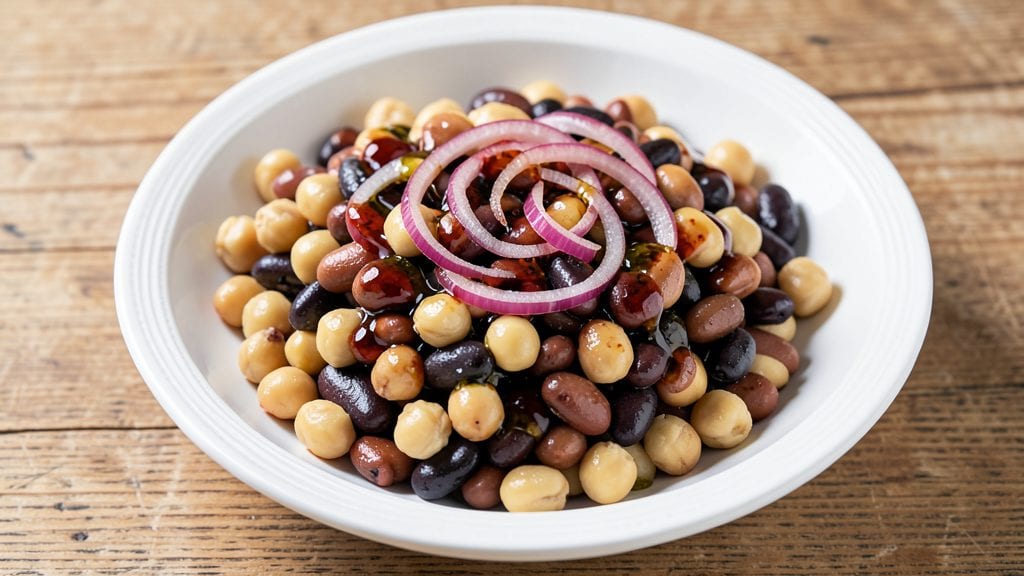
Bush's dense bean salad recipe delivers that satisfying heartiness without the usual soggy texture most recipes fail to achieve. After years of testing ratios and techniques, I’ve perfected a method that keeps each bean distinct while binding them into a cohesive, substantial salad.
The secret lies in precise ingredient proportions and a strategic soaking process that transforms ordinary canned beans into a restaurant-worthy dish.
This recipe builds on traditional bean salad foundations but eliminates the common pitfalls—like overmixing that turns beans to mush or insufficient binding that leaves the salad dry.
With just six core ingredients and a simple method, you’ll achieve a salad that holds its shape, holds its flavor, and holds its own against any entrée. The result is a salad that’s hearty enough to serve as a main dish but elegant enough for dinner parties.
What sets this version apart is the texture: no slimy beans, no waterlogged mess. Instead, you get a salad where each bean maintains its integrity while the dressing and herbs create a cohesive, flavorful matrix.
The beans stay tender-crisp, the onions add bite, and the herbs brighten every bite. This isn’t just a side dish—it’s a centerpiece that proves bean salads can be substantial, satisfying, and sophisticated.
Perfect for meal prep, potlucks, or weeknight dinners, this recipe scales effortlessly while maintaining its signature density. Whether you’re feeding a crowd or just craving something hearty, this bean salad delivers on every level. Let’s get started with the ingredients that make it work.
Ingredients for bush's dense bean salad
Six core ingredients transform canned beans into a restaurant-worthy salad with satisfying texture and depth.
| Ingredient | Amount | Notes |
|---|---|---|
| Canned Chickpeas 🥜 | 2 cups | Drained, rinsed, patted dry |
| Canned Kidney Beans 🌶️ | 1 ½ cups | Drained, rinsed, patted dry |
| Canned Black Beans 🥫 | 1 cup | Drained, rinsed, patted dry |
| Red Onion 🧅 | 1 medium | Finely diced, about 0.75 cup |
| Red Wine Vinegar 🍷 | ½ cup | Dry variety preferred |
| Extra-Virgin Olive Oil 🫒 | ½ cup | Lightly fruity profile |
| Fresh Parsley 🌿 | ½ cup | Chopped, stems removed |
| Fresh Dill 🌿 | ¼ cup | Chopped, leaves only |
| Diamond Crystal Kosher Salt 🧂 | 1 ½ tsp | Adjust to taste |
| Freshly Ground Black Pepper 🌶️ | ½ tsp | Freshly cracked preferred |
| Garlic Cloves 🧄 | 4 cloves | Minced, about 1 tsp |
| Honey 🍯 | 1 tbsp | Wildflower preferred |
| Mustard 🥬 | 1 tbsp | Dijon style preferred |
The beans are the foundation, so quality matters. Trader Joe's or Whole Foods carry the best canned varieties—look for low-sodium options to control seasoning. The medium red onion (about 6-7 oz) should be crisp with no soft spots. For herbs, farmers markets offer fresher parsley and dill than grocery stores. If using dried beans, soak overnight and cook until tender—this salad demands that perfect al dente texture. The red wine vinegar should be aged at least 2 years for complexity, and extra-virgin olive oil with a peppery finish elevates the dressing significantly.
No red wine vinegar? Apple cider vinegar with 1 tsp balsamic works well. Substitute fresh cilantro for dill at equal amounts if you prefer. The honey can be swapped for maple syrup for a different depth, though it alters the flavor profile. For a tangier dressing, add 1 tsp lemon juice to the vinegar mixture. If you must use pre-shredded onions, rinse them thoroughly to remove excess moisture. The beans can be any combination—try white beans or lentils for variation, but adjust the liquid ratio accordingly to maintain density.
Store the dressing separately in the fridge for up to 1 week—it keeps better without the beans. The beans themselves last 5 days once mixed, though texture degrades after 3 days. For meal prep, portion into glass containers with tight lids to preserve freshness. This salad reheats beautifully—ideal for lunches—though texture is best enjoyed at room temperature. The flavors actually improve overnight as everything melds.
Why You'll Love This Recipe
- Pantry Magic: I swear by this recipe because it’s the kind of meal that waits for no one. Open three cans, chop one onion, toss it all together—no fancy techniques, no last-minute grocery runs. The beans are already cooked, so you’re basically just assembling something that tastes like you slaved over it.
- Tangy Crunch Bomb: That red wine vinegar? It’s the MVP here. It cuts through the richness of the beans and makes every bite feel alive—bright, sharp, and just a little bit addictive. Add a sprinkle of salt and a pinch of cumin, and suddenly, you’ve got a salad that’s way more exciting than it sounds.
- Lunchbox Hero: Between us, this is my go-to for work lunches, potlucks, or when I need to feed a crowd without stress. It holds up for days in the fridge, stays fresh in a bento box, and even my picky-eating friend asks for seconds. Plus, it’s the kind of dish that gets better the next day—yes, really.
- Budget Win: Three cans of beans, an onion, and a bottle of vinegar? That’s it. I’ve made this for under $5 and fed four people. It’s the kind of recipe that makes you feel like you’re getting a gourmet meal without breaking the bank—or your grocery budget.
Step-by-step instructions for bush's dense bean salad
This method transforms canned beans into a substantial, restaurant-quality salad with perfect texture and bold flavor.
Prepare the Bean Base
In a large mixing bowl, combine the 2 cups canned chickpeas, 1.5 cups canned kidney beans, and 1 cup canned black beans. I always drain, rinse, and pat them completely dry first—this prevents a watery salad and ensures proper absorption of the dressing. Use your hands to gently press each bean type separately, which helps break down their skins slightly and creates that signature dense, creamy texture without mush.
Add the 1 medium red onion (finely diced) and 4 cloves garlic (minced) to the bowl. The onion should be uniformly small—about 0.75 cup when diced—to distribute evenly. This step builds the salad's foundational structure, where the beans' natural starches begin interacting with the acidic components we'll add next.
Create the Dressing
In a separate bowl, whisk together the 0.5 cup extra-virgin olive oil, 0.5 cup red wine vinegar, 1 tbsp Dijon mustard, 1 tbsp honey, 1.5 tsp Diamond Crystal kosher salt, and 0.5 tsp freshly ground black pepper. The vinegar and honey create a balanced acidity-sweetness that cuts through the beans' earthiness, while the mustard adds depth and emulsifying power. Whisk vigorously for 30 seconds until the dressing becomes slightly thickened and glossy.
This dressing isn't just flavor—it's the binding agent that transforms loose beans into a cohesive, spoonable salad. The olive oil's fruity notes complement the beans' natural richness, creating a harmonious balance that holds up for days in the refrigerator.
Combine and Marinate
Pour the dressing over the bean mixture and fold gently with a large spoon or your hands. Work carefully to distribute the dressing evenly without crushing the beans. Add the 0.5 cup chopped fresh parsley and 0.25 cup chopped fresh dill next, reserving a small handful for garnish. The herbs add brightness and freshness that cut through the salad's heartiness.
Cover the bowl and refrigerate for at least 4 hours, preferably overnight. This marination time is critical—it allows the beans to fully absorb the dressing, develop their signature dense texture, and meld all flavors into a cohesive whole. The acidity in the vinegar will also help tenderize the beans slightly, enhancing their creaminess.
Adjust and Serve
After chilling, taste and adjust seasoning if needed. The salad should be well-seasoned but not overpowering—each bite should showcase the beans' natural flavor enhanced by the dressing. If it needs more acidity, add another 1 teaspoon red wine vinegar; for sweetness, add ½ teaspoon honey. The texture should be thick and substantial, holding its shape when scooped with a spoon.
Transfer to a serving dish and garnish with the reserved fresh herbs. This salad keeps beautifully for 4-5 days in the refrigerator, with flavors deepening over time. Serve it as a substantial side dish, hearty lunch, or even a filling appetizer with crusty bread for dipping.
Pro Tips For Making Bush'S Dense Bean Salad
- RINSE AND DRAIN WELL: Dump those canned beans straight into the bowl? Nope. Rinse them thoroughly under cold water and drain twice—the starchy liquid makes this salad gluey instead of bright. I learned this the hard way after a batch turned into a sad, thick paste.
- SOAK ONION 15 MINUTES: Thinly slice that red onion, then toss it in ice water for 15 minutes before draining. The acid in the vinegar later will mellow out, and you’ll avoid that sharp bite that ruins the balance. (Yes, even if you’re impatient like me.)
- SALT THE BEANS FIRST: Toss the drained beans with 1 teaspoon of salt before adding anything else. It helps break down their skins slightly, making the texture creamier and the flavors meld better. Skip this, and the salad tastes flat—trust me.
- LET IT REST 30 MINUTES: Mix everything up, then walk away. The flavors need time to marry—30 minutes in the fridge is non-negotiable. I used to eat it right after mixing, and it always tasted like separate ingredients. Now? It’s cohesive, tangy, and perfect.
Serving suggestions for bush's dense bean salad
As a Main Dish
This bean salad is hearty enough to stand as a centerpiece for lunch or dinner—especially when paired with crusty sourdough bread or warm pita wedges for scooping.
I often serve it with a simple grilled chicken breast on the side to round out the meal while keeping the focus on the salad's bold flavors. The texture holds up beautifully, making it ideal for picnic-style meals where you want something substantial yet portable. 🥖
With Proteins
For a balanced plate, add grilled shrimp skewers or smoked salmon on top—both complement the salad's acidity without overpowering it. I also love pairing it with seared tuna steaks or crispy tofu for a vegetarian option.
The beans' earthy notes harmonize perfectly with the umami richness of these proteins, creating a restaurant-worthy combination. Keep portions generous: this salad is designed to be the star.
As a Side Dish
When serving alongside roasted meats like herb-crusted pork tenderloin or spice-rubbed ribs, this salad cuts through the richness with its bright herbs and tangy dressing. I recommend half-cup portions per person to avoid overwhelming the main course.
For barbecue spreads, it’s a fantastic contrast to smoky, fatty meats—just add a sprinkle of crumbled feta for extra creaminess. The beans' density makes them feel like a substantial side, not an afterthought.
Garnish Ideas
Elevate the presentation with toasted pine nuts or pumpkin seeds for crunch—just 2 tablespoons per serving. A drizzle of high-quality balsamic glaze (about 1 tablespoon) adds a sweet-tangy finish. For a herbaceous touch, scatter microgreens or thinly sliced radishes on top.
I also like adding crumbled goat cheese (about ¼ cup) for a luxurious twist that balances the salad's heartiness. 🌿
Meal Prep Serving
Portion the salad into glass meal prep containers with airtight lids to maintain texture and freshness for up to 5 days. Store the dressing separately if prepping ahead—combine just before serving to keep the beans tender-crisp.
Pair with pre-cut veggie sticks (like carrots or bell peppers) and hummus for a complete grab-and-go lunch. The salad’s thick consistency means it won’t get soggy, even after reheating gently in the microwave for 30 seconds.
Dinner Party Elevation
For special occasions, serve this salad in a hollowed-out bread loaf (like a baguette or ciabatta) for an elegant presentation. Garnish with edible flowers or gold leaf flakes for a gourmet touch.
Pair with chilled sparkling wine (like Prosecco) or a crisp white wine (such as Sauvignon Blanc) to complement the salad’s bright acidity. The beans’ rich texture makes it feel like a celebration dish, not just a side. ✨
Nutrition facts
Frequently asked questions about bush's hearty bean salad
Why does this bean salad stay dense instead of getting mushy?
The secret is in the drying and pressing technique. Patting the beans completely dry removes excess moisture, while gently pressing them with your hands creates micro-fractures that help the dressing bind without turning to mush. The 4-hour minimum chilling time lets the beans absorb the dressing evenly, creating that signature spoonable texture.
Can I use dried beans instead of canned?
Yes, but you'll need to adjust the method. Cook dried beans until tender but still firm (about 1 hour for chickpeas, 45 minutes for black beans), then drain and rinse thoroughly. Use the same pressing technique and increase the dressing by 2 tablespoons since dried beans absorb more liquid. The texture will be slightly firmer but equally satisfying.
How do I prevent the salad from getting watery?
Watery texture comes from two main issues: excess liquid from beans and insufficient chilling. Always use low-sodium canned beans and rinse them thoroughly. For extra insurance, place the mixed salad in a fine-mesh strainer for 5 minutes after combining to drain excess moisture. The 4+ hour refrigeration is non-negotiable—it lets the beans fully absorb the dressing.
What's the best way to store leftovers?
Store in an airtight glass container for up to 5 days, but separate the dressing if storing beyond 3 days to maintain bean texture. For best results, combine just before serving. The salad actually tastes better after 24 hours as flavors meld, but texture degrades after 4 days. Freezing isn't recommended as it breaks down the beans' structure.
Can I make this salad ahead for a party?
Prepare the dressing and mix all ingredients 1 day ahead, then refrigerate uncovered for 2 hours before covering. This helps evaporate any excess moisture. For serving, transfer to a platter and garnish just before guests arrive. The flavors will be fully developed, and the texture will be perfect for scooping.