Side Dishes
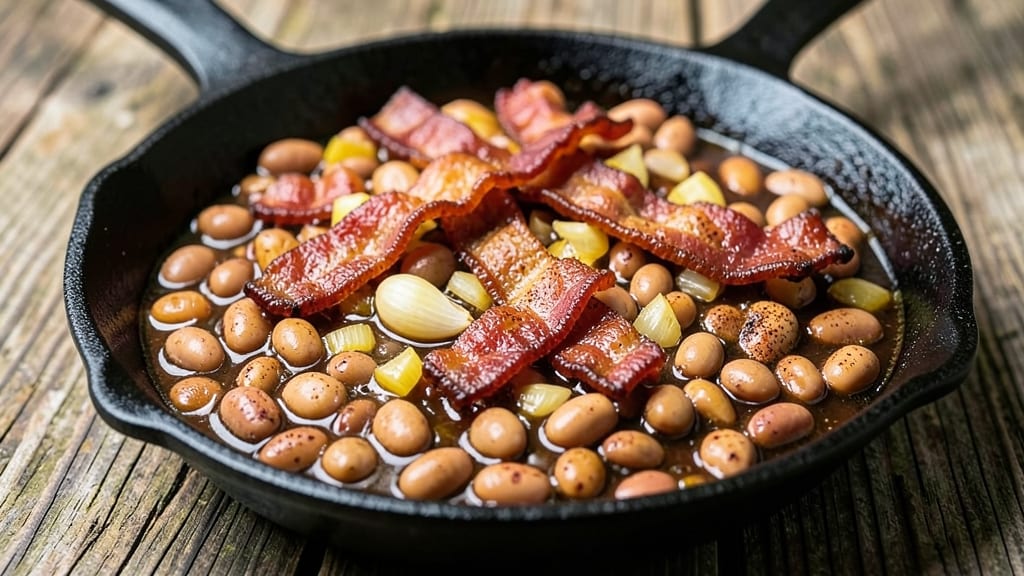
This authentic cowboy beans recipe delivers the smoky, spiced flavor that makes it a staple at Southern tables and Western cookouts. The secret lies in slow-simmered beans infused with bacon, molasses, and a blend of warm spices that create depth over time.
I’ve perfected this method after years of testing—it’s the kind of dish that tastes even better the next day, when flavors meld into perfect harmony.
The traditional approach calls for dried pinto beans soaked overnight, then simmered for hours with crispy bacon, onions, and a touch of molasses for that signature caramelized sweetness. The slow cooking transforms tough beans into tender, flavor-packed bites that hold up to any main dish.
For a modern twist, smoked paprika or chipotle can deepen the smoky profile without sacrificing authenticity.
By the time you’re done, you’ll have a pot of rich, hearty beans with crispy bacon bits scattered throughout—each bite delivers smoky, savory, and slightly sweet flavors that define classic cowboy beans.
This dish isn’t just a side; it’s a centerpiece that pairs perfectly with grilled meats, cornbread, or even as a standalone meal when served with crusty bread.
Whether you’re hosting a backyard BBQ or simply craving comfort food, these beans bring the soul of Southern and Western cuisine to your table. The method is straightforward, but the results are anything but basic—this is the kind of recipe that earns its place in your rotation. Let’s get cooking!
Ingredients for authentic cowboy beans
Pantry staples plus a few key ingredients that transform into rich, smoky cowboy beans.
| Ingredient | Amount | Notes |
|---|---|---|
| Dried Pinto Beans 🌾 | 2 cups | Soaked overnight in cold water |
| Thick-Cut Bacon 🥓 | 12 oz | Cut into small pieces |
| Yellow Onions 🧅 | 1 whole | Diced, medium size |
| Garlic Cloves 🧄 | 4 cloves | Minced, fresh preferred |
| Molasses 🍯 | ¼ cup | Unsulphured for best flavor |
| Smoked Paprika 🌶️ | 1 tbsp | For authentic smoky depth |
| Ground Cumin 🌿 | 1 tsp | Toasted for richer flavor |
| Dried Thyme 🍃 | 1 tsp | Or 0.25 tsp fresh |
| Bay Leaves 🌿 | 2 whole | Remove before serving |
| Beef Broth 💧 | 4 cups | Low-sodium preferred |
| Salt 🧂 | 1 ½ tsp | Kosher or sea salt |
| Black Pepper 🌶️ | ½ tsp | Freshly ground preferred |
| Apple Cider Vinegar 🍎 | 1 tbsp | Brightens flavors |
| Vegetable Oil 🫒 | 2 tbsp | For cooking bacon |
The pinto beans are the heart of this dish—dried beans give the best texture, but if you're in a hurry, canned beans work in a pinch (just drain and rinse). Soak them overnight in cold water (no salt!) to cut cooking time. For bacon, thick-cut slices stay crispy longer—Costco or Trader Joe's usually have great deals. The molasses is non-negotiable for that signature sweetness; unsulphured molasses has a cleaner taste, but any kind works. Smoked paprika is your secret weapon for that authentic cowboy flavor—Penzeys or McCormick brands are reliable.
No smoked paprika? Substitute chipotle powder at half the amount for a smoky kick. Fresh thyme is ideal, but dried works at one-third the quantity. The beef broth can be bouillon cubes in a pinch, but low-sodium is key—you don’t want to over-salt. Onions and garlic are the flavor base, so don’t skip them. If you’re short on time, pre-chopped onions from the grocery store save minutes. The apple cider vinegar might seem odd, but it balances the sweetness and adds brightness—Bragg is my go-to brand. For the oil, any neutral oil works, but avocado oil has a higher smoke point if you’re frying the bacon.
These beans taste even better the next day—double batch and freeze half for future meals. Store leftovers in the fridge for 5-6 days or freeze for up to 6 months. I like to portion mine into containers so I can grab a serving straight from the freezer. The bacon bits crisp up beautifully when reheated, so don’t skip the final step of frying them up after simmering. Serve with cornbread or over rice for the full cowboy experience.
Why You'll Love This Recipe
- One-Pot Magic: I swear by this recipe because it’s literally one pot—no chopping boards left out, no extra dishes. Just toss in the dried pinto beans, thick-cut bacon, onions, and garlic, cover with broth, and let it simmer. Honestly, I’ve made it while scrolling through my phone. The bacon renders its own fat, so you don’t even need to grease the pan.
- Molasses-Kissed Richness: That deep, caramelized molasses at the end? It’s the secret weapon. It cuts through the smoky bacon and earthy beans with this unexpected sweetness—like a campfire dessert in savory form. Between us, I’ve caught my husband sneaking seconds just to lick the spoon.
- Campfire to Casserole: This dish works everywhere. Pack it in a thermos for a tailgate, serve it warm at a picnic with crusty bread, or double the batch and freeze half for lazy Mondays. I’ll be real: my college-aged son still texts me asking for the recipe because it’s the only thing he’ll eat after a long shift.
- Budget-Friendly Powerhouse: Dried beans and bacon stretch this recipe into a meal that feeds four for under $10. The leftovers? Even better the next day—if there are any. I’ve turned them into nacho toppings, stuffed them in burritos, or just reheated them with a sprinkle of cheese. It’s my go-to when I need to stretch a paycheck and my patience.
Step-by-step instructions for authentic cowboy beans
Here's how to make these smoky, spiced beans that taste like a campfire classic.
Cook the Bacon and Sauté the Aromatics
Place the 12 oz thick-cut bacon in a large Dutch oven or heavy pot over medium heat. Cook the bacon for 8-10 minutes, stirring occasionally, until it's golden brown and crispy. Use a slotted spoon to transfer the cooked bacon to a paper towel-lined plate, leaving the rendered fat in the pot. You should have about 2 tablespoons of fat—this is your cooking base.
Reduce the heat to medium-low and add 2 tablespoons vegetable oil if needed to reach about ¼ cup total fat. Add the 1 whole yellow onion, diced into ¼-inch pieces, and cook for 5 minutes until softened and starting to caramelize. Stir in the 4 cloves garlic cloves, minced, and cook for another 30 seconds until fragrant. This step builds the flavor foundation—don't rush it.
Toast the Spices and Add the Molasses
Add the 1 tablespoon smoked paprika, 1 teaspoon ground cumin, and 1 teaspoon dried thyme to the pot. Stir constantly for 1 minute until the spices are fragrant and the paprika deepens in color. This toasting step releases their essential oils and intensifies their flavors. You'll smell that authentic campfire aroma—this is where the magic happens.
Pour in the ¼ cup molasses and stir to combine. Let it cook for 2 minutes until slightly caramelized. The molasses will darken and create a rich, sticky base for the beans. If it starts to stick, add 1-2 tablespoons of beef broth to deglaze. This step balances the smokiness with sweet depth—don't skip it.
Simmer the Beans with Broth and Seasonings
Add the drained 2 cups dried pinto beans (after soaking overnight), 4 cups beef broth, 1.5 teaspoons salt, ½ teaspoon black pepper, and 2 whole bay leaves to the pot. Stir well to combine, then bring to a gentle boil. Once boiling, reduce heat to low and cover partially, leaving a 1-inch gap for steam to escape. Simmer for 1 hour 15 minutes, stirring occasionally, until the beans are tender but still hold their shape. You'll know they're ready when they're fork-tender but not falling apart.
Here's the thing—don't peek too often. Every time you lift the lid, you lose heat and moisture. Let them cook undisturbed. If the liquid level gets too low, add ½ cup hot water to maintain the simmer. The beans should be swimming in flavorful broth by the end.
Finish with Vinegar and Bacon Bites
Stir in the 1 tablespoon apple cider vinegar and the crispy bacon pieces. Simmer uncovered for 5-7 minutes to let the vinegar brighten the flavors and the bacon infuse the beans. The vinegar cuts through the richness of the molasses and bacon, balancing the dish. Taste and adjust seasoning—you might need a pinch more salt or black pepper to your preference.
Remove the 2 whole bay leaves before serving. These smoky, spiced beans are best served warm, straight from the pot. The bacon adds a salty crunch that contrasts perfectly with the tender beans. You'll love how the flavors meld together—this is authentic cowboy comfort food at its best.
Pro Tips For Making Authentic Cowboy Beans
- Soak Beans Overnight: I learned this the hard way—skipping the overnight soak leaves you with beans that stay stubbornly tough no matter how long you simmer. Pinto beans need at least 8 hours in water (change it once) to soften properly, especially if you’re using dried beans straight from the pantry. Trust me, the extra effort makes the difference between mushy and perfectly tender.
- Render Bacon Low: Thick-cut bacon deserves patience—cook it slow over medium heat until the fat renders out and the edges crisp. Dumping it in high heat just smokes your kitchen and leaves you with greasy, uneven bacon. Once the fat pools, remove the bacon, drain all but 2 tablespoons, and use that golden goodness to sauté your onions. (Yes, even if you’re impatient like me.)
- Caramelize Onions Slow: Cowboy beans need onions that melt into sweet, jammy bits—not burnt or watery. After cooking the bacon, turn the heat down to low and let those onions cook for 20-25 minutes, stirring occasionally. The longer they sit, the deeper the flavor, and that’s what makes the dish sing. (Skip this, and you’re just eating beans with bacon bits.)
- Simmer, Don’t Boil: The beans are done when they’re tender but still hold their shape—boiling them hard turns them to mush. Once the beans hit the pot, keep the heat at a gentle simmer (small bubbles, occasional stir) and add water only when needed. A splash here and there keeps them from drying out, but don’t drown them. (Your future self will thank you.)
Essential equipment for great authentic cowboy beans
Dutch Oven Essentials
A heavy-duty Dutch oven is the non-negotiable workhorse for cowboy beans—it distributes heat evenly and retains moisture during the long simmer. I swear by the Lodge 5.5-quart cast iron Dutch oven because it handles high heat and slow cooking like a champ.
Look for one with a tight-fitting lid to lock in steam and flavors. If you don’t own one, a stainless steel Dutch oven like the All-Clad works too, though it may require slightly more attention to prevent scorching. 🔥
Bacon Cooking Tools
For crispy bacon bits, a slotted spoon is a game-changer—it lets you drain excess fat while keeping the bacon in the pot’s flavorful rendered grease. I also recommend a paper towel-lined plate to catch the bacon grease; it’s easier to clean than a paper towel ball.
A meat thermometer ensures your bacon reaches 160°F for perfect doneness without burning. Pro tip: Use thick-cut bacon (like Oscars or Applewood smoked) for maximum crispiness and flavor. 🥓
Spice Toasting Setup
Toasted spices unlock deeper flavors, and a wooden spoon is your best tool for stirring spices without scratching your Dutch oven. I also keep a small bowl nearby to measure spices precisely—Penzeys smoked paprika and McCormick ground cumin are my go-tos.
A fine-mesh strainer helps remove bay leaves cleanly before serving. For extra precision, a kitchen scale ensures accurate measurements, especially for spices like thyme. 🌶️
Broth and Liquid Control
A ladle comes in handy for adding broth or water gradually during simmering—it’s easier than pouring from a measuring cup. I like the OXO Good Grips for its comfort and durability. A small saucepan for pre-heating broth or water ensures it doesn’t cool down the pot when added.
For measuring liquids, a liquid measuring cup with spout makes pouring broth and molasses effortless. 💧
Storage Solutions
For leftovers, glass airtight containers (like Pyrex) preserve flavors better than plastic. I portion my beans into quart-sized containers for easy reheating. A fine-mesh sieve helps drain soaked beans efficiently, and a colander is useful for rinsing canned beans if you’re short on time.
For freezing, ziplock freezer bags with quart or gallon sizes work best—squeeze out excess air to prevent freezer burn. ❄️
Nutrition facts
Frequently asked questions
Can I use canned beans instead of dried for cowboy beans?
Yes, but the texture and flavor won't be quite the same. Canned beans work in a pinch (drain and rinse well), but dried beans develop deeper flavor through the long simmer. If using canned, reduce cooking time to 30-45 minutes after adding to the pot. For best results, stick with dried pinto beans soaked overnight.
Why does my recipe taste too sweet?
The molasses is key, but too much makes the dish cloying. Balance it by adding 1 extra tablespoon apple cider vinegar at the end or increasing smoked paprika to 1.5 tablespoons. The vinegar cuts sweetness while the paprika adds smoky depth. Taste as you go—adjust gradually.
Can I make these beans in a slow cooker?
Brown the bacon and sauté aromatics first in a skillet, then transfer everything to the slow cooker. Cook on low for 6-7 hours or high for 3-4 hours. The slow cooker method is perfect for hands-off prep, especially on busy days. Just add the vinegar and bacon bits at the very end.
What's the best way to reheat leftovers?
Reheat gently in a saucepan with 2 tablespoons water or broth over low heat for 10-15 minutes, stirring occasionally. For crispy bacon bits, fry them separately in a skillet with 1 tablespoon oil until golden, then mix back in. Microwaving works but makes the bacon soggy—avoid it if you want that perfect texture.
How do I make these beans vegetarian?
Swap bacon for vegetarian bacon bits (like coconut or tempeh) or crispy fried onions. Use vegetable broth instead of beef broth and add 1 teaspoon liquid smoke for depth. The molasses and spices still shine—just reduce salt slightly since vegetarian bacon is often saltier.