
Side Dishes
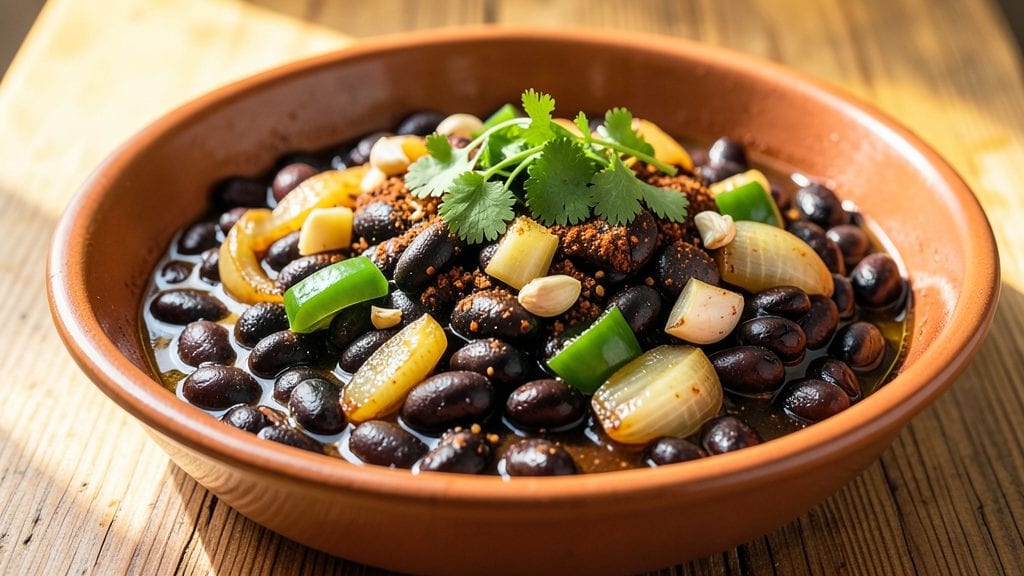
This traditional Cuban black beans recipe delivers the smoky, aromatic depth that makes it a cornerstone of Cuban home cooking. Growing up, I watched my Nonna stir these beans for hours, letting the sofrito—her secret blend of garlic, onions, and bell peppers—infuse every spoonful with warmth.
The result is a dish that's as much about technique as it is about ingredients, where patience transforms simple beans into something rich and unforgettable.
The foundation of these beans lies in the sofrito, which builds flavor through slow cooking with cumin, bay leaves, and a touch of smoked paprika. Unlike many quick versions, this recipe insists on soaking the beans overnight to ensure tender, creamy texture without losing their structure.
The spices develop gradually, creating layers of earthy, slightly sweet complexity that define authentic Cuban cuisine—vegan by nature but packed with satisfying depth.
By the time you're done, your kitchen will smell like a Havana kitchen, and every bite will deliver that perfect balance of smoky, savory, and slightly sweet. These beans hold their shape beautifully, making them ideal for serving alongside rice, plantains, or grilled meats.
The secret? Low heat and attention to detail—no shortcuts, just the kind of cooking that turns a simple side dish into a centerpiece.
Perfect for family meals, potlucks, or when you want to bring a taste of Cuba to your table. The recipe scales easily, so you can make enough to feed a crowd or just enough for leftovers that taste even better the next day. Let's get started on this flavorful journey.
Ingredients for traditional cuban black beans
Sixteen ingredients, but only four really matter for that Cuban soul—black beans, sofrito, cumin, and time.
| Ingredient | Amount | Notes |
|---|---|---|
| Dried Black Beans 🥣 | 2 cups | Soaked overnight, drained |
| Yellow Onion 🧅 | 1 whole | Medium, diced (about 1.5 cups) |
| Green Bell Pepper 🌶️ | 1 whole | Diced (about 1 cup) |
| Garlic Cloves 🧄 | 6 cloves | Minced, fresh preferred |
| Ground Cumin 🌿 | 2 tsp | Toasted for deeper flavor |
| Smoked Paprika 🌶️ | 1 tbsp | For authentic smoky taste |
| Bay Leaves 🍃 | 2 whole | Dried, standard size |
| Vegetable Oil 🫒 | ¼ cup | For sautéing sofrito |
| Tomato Paste 🍅 | ½ cup | No-sugar-added preferred |
| Vegetable Broth 💧 | 4 cups | Low-sodium preferred |
| Lemon Juice 🍋 | 2 tbsp | Freshly squeezed |
| Salt 🧂 | 1 ½ tsp | Adjust to taste |
| Black Pepper 🌶️ | ½ tsp | Freshly ground |
| Fresh Cilantro 🌿 | ¼ cup | Chopped, for garnish |
The beans are non-negotiable—dried black beans give you that perfect texture. Trader Joe's or Hispanic markets usually have the best selection. Soak them overnight (or at least 8 hours) in plenty of water—no skimping. The sofrito trio—onion, bell pepper, and garlic—should be fresh. Yellow onions add sweetness, while green bell peppers keep it bright. If you can't find fresh cilantro, dried works in a pinch, but fresh is better for garnish. The smoked paprika? Penzeys or Goya brands nail that authentic smoky flavor—don't use regular paprika here.
No smoked paprika? Substitute half a teaspoon of liquid smoke plus regular paprika, but it won't be the same. Fresh bell pepper? Roasted red pepper paste works in a bind (2 tbsp). The tomato paste can be skipped if you're tight on time, but it adds that slightly sweet depth. For the broth, low-sodium is key—you'll add salt later. The beans can be pre-cooked (canned, drained, rinsed), but soaking overnight gives you the best texture. If you're short on time, soak them for 4 hours minimum with a pinch of baking soda to soften them faster.
These beans reheat like a dream—better the next day once all the flavors meld. Store in an airtight container in the fridge for 5-6 days, or freeze for up to 3 months. I like to portion them into containers with rice and plantains for easy lunches. The sofrito base keeps for 3 days in the fridge if you make it ahead—just freeze the beans separately. Garnish with fresh cilantro right before serving, or it'll wilt faster. Trust me, the extra 10 minutes of soaking makes all the difference.
Why You'll Love This Recipe
- I’ll be real: soaking dried beans used to stress me out. But these black beans? Just a quick rinse, then simmer with onion and garlic while you chop the bell pepper—no fancy prep, no waiting hours.
- Soaks Like a Pro: I’ll be real: soaking dried beans used to stress me out. But these black beans? Just a quick rinse, then simmer with onion and garlic while you chop the bell pepper—no fancy prep, no waiting hours.
- Smoky-Sweet Magic: That cumin and bell pepper combo? It’s the secret. The beans get this deep, earthy richness with just a hint of sweetness from the pepper—like a hug in a bowl, but way more delicious.
- Meal Prep MVP: Double the batch and you’ve got lunch for days. I swear, these beans taste even better the next day—perfect for rice bowls, tacos, or just scooping straight from the pot with a spoon.
Step-by-step instructions for traditional Cuban black beans
Here's how to make authentic Cuban black beans with that signature smoky sofrito flavor.
Sauté the Sofrito Base
Heat the 0.25 cup vegetable oil in a large pot over medium heat. Add the diced yellow onion and diced green bell pepper, cooking for 5-7 minutes until softened and slightly caramelized. You'll know it's ready when the vegetables release their moisture and start to brown at the edges.
Add the minced garlic cloves and cook for 30 seconds until fragrant—don't let it burn, or you'll get bitter flavors. Stir in the toasted ground cumin and smoked paprika, cooking for another 30 seconds to toast the spices and release their aromas. This is your sofrito base, and it's what gives these beans their authentic Cuban flavor.
Build the Bean Sauce
Reduce the heat to low and stir in the tomato paste, breaking it up with a wooden spoon. Cook for 2 minutes until it darkens slightly and blends smoothly into the sofrito. This step deepens the flavor and gives the beans their signature rich color.
Add the drained black beans, vegetable broth, bay leaves, salt, and black pepper. Bring everything to a gentle boil, then immediately reduce the heat to low-medium. The beans should simmer gently, not roll over and spill—this keeps them intact and prevents a mushy texture.
Simmer Until Tender
Cover the pot and let the beans simmer for 45-60 minutes, stirring occasionally. You're looking for beans that are tender but still hold their shape—when you taste one, it should be soft inside with just a slight resistance. If the beans start to stick to the bottom, add a splash of water or broth to keep them moist.
About 15 minutes before the beans are done, stir in the lemon juice. This brightens the flavors and cuts through the richness of the sofrito. The acidity also helps tenderize the beans further. Keep the heat low to prevent the beans from breaking apart.
Finish and Serve
Once the beans are tender, remove the bay leaves and discard them. Taste and adjust the seasoning with more salt or lemon juice if needed. The beans should be flavorful but not overly salty—Cuban black beans have a balanced, slightly tangy taste.
Garnish with the chopped fresh cilantro just before serving. This adds a fresh, bright finish that contrasts beautifully with the smoky, savory flavors of the sofrito. Serve the beans warm with rice, fried plantains, or grilled meats for a complete Cuban meal.
Pro Tips For Making Traditional Cuban Black Beans
- SOAK BEANS OVERNIGHT: I learned this the hard way—rushing the soak with hot water just makes them gummy. Use cold water and let them sit 8+ hours (or quick-soak: boil 2 minutes, then 1 hour off heat). This guarantees they break down evenly and stay tender without turning mushy.
- SWEAT ONIONS LOW: Don’t rush the onions—cook them on medium-low with a splash of water until they’re translucent and jammy (about 8-10 minutes). High heat burns them before they soften, and you’ll taste the raw bite in every spoonful. Sounds weird, but it works.
- ADD CUMIN LAST: Skip the urge to toss in cumin with the onions. Wait until the beans are almost done, then stir it in with the garlic and bell pepper. This keeps the spice bright and aromatic instead of dulling into the background—your future self will notice the difference.
- SIMMER NOT BOIL: Once the beans hit the pot, keep the heat at a bare simmer (tiny bubbles, not rolling). Boiling toughens dried beans and can split their skins. A steady simmer over 45-60 minutes guarantees creamy texture without the need for extra oil or flour to "fix" them.
Storing and reheating your leftovers
Refrigerator Storage
Let your black beans cool to room temperature before transferring them to an airtight container—I use glass Pyrex with snap-on lids for best results. Store in the fridge at 40°F or below for up to 5-6 days, though they actually taste better the second day as flavors meld.
The sofrito base keeps well too, so you can prep it ahead and freeze it separately if needed. 💪
Freezer-Friendly Tips
For longer storage, freeze the beans in quart-sized freezer bags or airtight containers, leaving 1 inch of headspace for expansion. They’ll keep for up to 3 months without losing texture or flavor.
I like to portion them into single-serving containers with rice and plantains for easy lunches—just reheat and serve. Label with the date to track freshness. ❄️
Stovetop Reheating
My preferred method is stovetop reheating to maintain texture. Pour beans into a pot with 2-3 tablespoons of water or broth, then heat over medium-low for 8-10 minutes, stirring occasionally.
The gentle heat prevents splitting and keeps the sofrito flavors intact. Taste and adjust seasoning—beans often need a pinch of salt after reheating. 🔥
Microwave Method
For quick reheating, transfer beans to a microwave-safe dish with a splash of water, cover with a damp paper towel, and heat on 50% power in 1-2 minute intervals, stirring between each.
Avoid full power to prevent mushy beans. Garnish with fresh cilantro right before serving to keep it vibrant. 💫
Sofrito Refresh
If you’ve stored beans with the sofrito for more than a few days, the flavors might dull. Revive them by sautéing 1 minced garlic clove and ½ tsp smoked paprika in 1 tbsp oil, then stirring it into the reheated beans.
This quick boost brings back that authentic Cuban depth. 🌶️
Leftovers Reinvented
Turn leftover beans into Cuban-style rice bowls by mixing with cooked rice, shredded cabbage, and a fried egg. Or blend them into a creamy dip with avocado and lime for tacos. The possibilities are endless—just don’t skip the cilantro garnish! 💡
Nutrition facts
Frequently asked questions about Cuban black beans
Why do I need to soak the beans overnight?
Soaking removes anti-nutrients that cause gas and helps the beans cook evenly to a creamy yet intact texture. Overnight soaking (8+ hours) is ideal, but a minimum 4-hour soak with ½ teaspoon baking soda works in a pinch. Skipping soaking risks tough beans that fall apart during cooking.
Can I use canned beans instead of dried?
Yes, but you'll sacrifice that authentic Cuban texture. Drain and rinse 3 cans (15 oz each) black beans, then simmer with the sofrito for 30-45 minutes to meld flavors. For best results, add ½ cup extra broth and reduce heat to prevent splitting. The beans won't be as creamy as dried, but it's a time-saving option.
What makes this recipe authentically Cuban?
The sofrito (onion, bell pepper, garlic) cooked low and slow with smoked paprika and toasted cumin creates that signature smoky depth. The beans stay intact (not mushy), and the lemon juice finish cuts through the richness—hallmarks of Cuban home cooking. Many shortcut recipes skip these key steps.
How do I fix beans that turned out mushy?
If your beans lost their shape, they likely boiled too vigorously. Next time, keep heat at low-medium and stir often. For a quick fix, mash 1 ripe avocado into the beans and serve as a dip—the creamy texture works surprisingly well! For future batches, reduce cooking time by 10-15 minutes and add beans to the pot only after the sofrito has developed flavor.
What sides pair best with these beans?
Cuban black beans shine with white rice (the classic combo), fried plantains, or grilled pork (like lechón). For a vegan spread, serve with avocado slices, corn on the cob, and tostones. The smoky beans also work as a hearty filling for empanadas or tacos—just add shredded cabbage for crunch!