Side Dishes
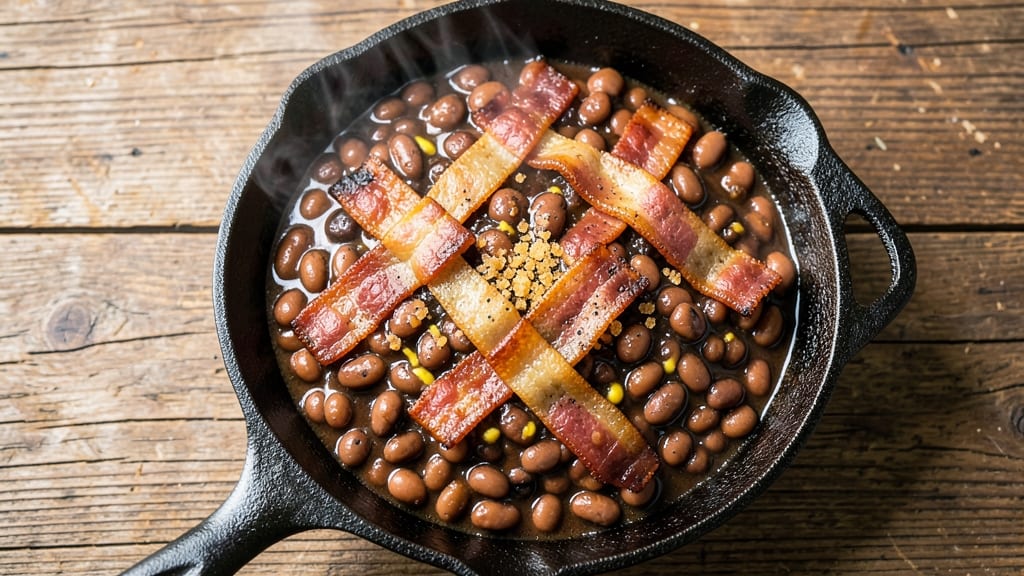
Grandma Jean's baked beans recipe is the one that transforms simple ingredients into a hearty, smoky-sweet centerpiece for any meal. I first tasted these beans at a family reunion when the scent of slow-cooked molasses and bacon filled the air—now, I make them every holiday season.
The secret lies in the slow simmer, where navy beans soften into tender perfection while absorbing the rich flavors of brown sugar, mustard, and spices.
This recipe requires just five key ingredients—navy beans, bacon, molasses, brown sugar, and a blend of mustard and spices—but the magic happens in the three-hour slow cook.
The bacon adds smoky depth, while the molasses and brown sugar create that signature caramelized sweetness. Unlike quick versions, this method develops layers of flavor that store-bought can’t match.
By the time it’s done, you’ll have beans that are tender, glossy, and bursting with flavor, ready to be served alongside cornbread or grilled meats. The aroma alone will have everyone gathering at the table—just like it did at Grandma Jean’s. Let’s get started on this tradition.
For best results, soak the beans overnight and brown the bacon until crispy. The slow cook ensures even cooking, while optional oven baking adds a caramelized crust. This isn’t just a side dish—it’s a comfort food classic that brings warmth to any meal.
Ingredients for grandma jean's baked bean
Heartwarming tradition meets kitchen essentials—just twelve ingredients for beans that taste like holiday magic.
| Ingredient | Amount | Notes |
|---|---|---|
| Navy Beans (Dried) 🌾 | 2 cups | Uncooked, soaked overnight |
| Thick-Cut Bacon 🥓 | ½ lb | Cut into 1/2-inch pieces |
| Unsulphured Molasses 🍯 | ½ cup | Dark, robust variety preferred |
| Light Brown Sugar 🍚 | ¾ cup | Packed tightly for accuracy |
| Yellow Mustard 🍯 | 2 tbsp | Prepared, not Dijon |
| Ground Black Pepper 🌶️ | 1 tsp | Freshly cracked for intensity |
| Ground Cinnamon 🌿 | ½ tsp | Warm, aromatic variety |
| Ground Cloves 🌶️ | ¼ tsp | Whole cloves ground fresh |
| Kosher Salt 🧂 | 1 ½ tsp | Diamond Crystal preferred |
| Onion Powder 🧅 | 1 tsp | Freshly ground preferred |
| Garlic Powder 🧄 | ½ tsp | Not garlic salt |
| Apple Cider Vinegar 🍎 | 1 tbsp | For tangy balance |
| Water 💧 | 4 cups | For soaking beans |
The foundation begins with navy beans—their firm texture holds up beautifully to the long cook. Costco or bulk bins at Whole Foods offer the best quality at reasonable prices. Soak them overnight in 4 cups of water—this cuts cooking time dramatically and ensures tender results. For the bacon, thick-cut slices from Oscar Mayer or Applewood brands deliver that perfect smoky depth. The molasses should be unsulphured—this preserves its rich, complex flavor without any artificial aftertaste. I always double-check the label to avoid sulphured varieties, which can leave an unpleasant bitterness.
No molasses? Substitute with 1/4 cup dark corn syrup plus 1/4 cup maple syrup for a close approximation, though the flavor won't be identical. Running short on brown sugar? White sugar works in a pinch, but the caramelization won't be as rich. For the mustard, prepared yellow mustard is essential—Dijon would overpower the delicate balance. If you're missing cloves, allspice at double the amount provides a similar warmth. The apple cider vinegar adds brightness, but white vinegar at half the quantity will do in a bind. For the spices, Penzeys or Spicewalla offer premium quality, but even basic grocery store brands work if they're fresh.
Store the dry beans in a cool, dark pantry for up to 12 months—they're shelf-stable when unopened. Once soaked, keep them refrigerated for 3 days or freeze them for 6 months in an airtight container. The cooked beans reheat beautifully—simmer for 5-10 minutes on the stove or 30 seconds in the microwave with a splash of water. I always make a double batch; the leftovers freeze perfectly for 3 months and make quick lunches when reheated with a sprinkle of fresh black pepper.
Why You'll Love This Recipe
- One-Pot Magic: I swear by this recipe because it’s literally dump-and-bake. Soak the dried navy beans overnight (or use a pressure cooker for speed), toss them with crumbled bacon, molasses, and sugar, then let the oven do the work. No stirring, no fuss—just rich, smoky perfection by dinner.
- Sweet-Savory Balance: That molasses and brown sugar combo? It’s where this dish gets its soul. The mustard cuts through the sweetness just enough, while the thick-cut bacon adds a salty crunch that makes every bite feel like a hug. Honestly, it’s the kind of flavor that lingers—even my picky husband asks for seconds.
- Potluck Star: Between us, this is my go-to for gatherings. It reheats beautifully, serves a crowd, and actually improves the next day (yes, really). Bring it to a picnic, church dinner, or holiday spread—it’s the dish people will fight over.
- Budget-Friendly Staple: Dried beans and bacon stretch this recipe into a full meal without breaking the bank. I’ve fed my family of four for under $10, and the leftovers? Perfect for sandwiches or tacos later. Not the prettiest, but the taste makes up for it every time.
Step-by-step instructions for Grandma Jean's baked beans
Here's the method that delivers that signature smoky-sweet balance Grandma Jean perfected.
Prepare the Beans for Cooking
Begin by rinsing the 2 cups of dried navy beans under cold water to remove any debris. Place them in a large bowl and cover with the 4 cups of water by at least 2 inches. Let them soak overnight at room temperature—this ensures even cooking and prevents splitting during the long bake.
After soaking, drain the beans and give them a quick rinse again. This removes excess starch that could make the beans gummy. I like to do this preparation step the night before baking, as it allows the beans to absorb moisture evenly and reduces cooking time in the oven.
Cook the Bacon and Build the Flavor Base
Cut the 0.5 lb of thick-cut bacon into ½-inch pieces and cook them in a large oven-safe skillet over medium heat until crispy. This should take about 8-10 minutes. Remove the bacon with a slotted spoon and set it aside on paper towels to drain excess fat.
In the same skillet, reduce the heat to medium-low and add the 0.5 cup of unsulphured molasses, 0.75 cup of light brown sugar, 2 tbsp of yellow mustard, 1 tsp of ground black pepper, 0.5 tsp of ground cinnamon, 0.25 tsp of ground cloves, 1.5 tsp of kosher salt, 1 tsp of onion powder, and 0.5 tsp of garlic powder. Stir continuously for 3-4 minutes until the mixture becomes thick and fragrant.
This step is where the magic happens—the molasses and spices meld together, creating a rich, aromatic base. The brown sugar helps balance the bitterness of the molasses, while the spices add depth. I always stir in the same direction to prevent scorching at the bottom of the pan.
Combine and Slow-Cook the Beans
Return the cooked bacon to the skillet and add the drained beans along with the 1 tbsp of apple cider vinegar. Stir everything together until the beans are evenly coated in the molasses mixture. The vinegar adds a subtle tang that cuts through the sweetness.
Transfer the skillet to a preheated 325°F oven and cover tightly with a lid or foil. Bake for 3-4 hours, stirring once halfway through the cooking time. The beans should be tender and the sauce thickened by the end. If the beans aren't tender after 3 hours, continue baking for another 30 minutes.
This slow cooking is essential—it allows the beans to absorb all the flavors and develop that signature tender texture. The low temperature ensures the beans cook evenly without splitting. I check for doneness by pressing a bean with a fork; it should be soft but not mushy.
Finish and Serve
Once the beans are tender, remove the skillet from the oven and let them rest for 10-15 minutes. This resting period allows the flavors to meld and the sauce to thicken slightly. If the sauce is too thin, you can simmer it uncovered on the stovetop for an additional 5-10 minutes to reduce it to your desired consistency.
Serve the baked beans warm, straight from the oven. The combination of smoky bacon, sweet molasses, and aromatic spices creates a dish that's both comforting and deeply flavorful. Grandma Jean always said the beans taste best when served with cornbread or crusty bread to soak up every last bit of that rich sauce.
Pro Tips For Making Grandma Jean'S Baked Bean
- SOAK BEANS OVERNIGHT: DESCRIPTION: I learned this the hard way—skipping the soak with navy beans leaves them tough even after hours of baking. Toss them in a bowl with plenty of cold water (at least 3 inches above the beans) and a pinch of salt, then let them sit 12+ hours. Drain and rinse before cooking, and you’ll get that creamy texture Grandma Jean swore by.
- COOK BACON LOW AND SLOW: DESCRIPTION: Thick-cut bacon deserves patience—don’t rush it. Cook it at 300°F (yes, low) until crispy, stirring every 10 minutes or so. The fat renders slower, and the flavor gets deeper, which makes the whole dish taste richer. Save the crispy bits for topping; they’re the star.
- STIR THE BEANS MIDWAY: DESCRIPTION: After the first hour of baking, give those beans a good stir—especially around the edges. I used to forget, and the sides would dry out or scorch while the center stayed undercooked. A quick mix ensures even caramelization and keeps the molasses from burning. (Your future self will thank you.)
- USE LESS MUSTARD AT FIRST: DESCRIPTION: Yellow mustard can overpower if you dump it all in early. Start with half the amount called for, let the beans simmer in the sauce for 45 minutes, then add the rest. This balances the sweetness of the molasses and sugar without making the dish taste sharp or one-note. Trust me, it makes a real difference.
Pro cooking tips for this recipe
Slow Cooking Secrets
The key to Grandma Jean’s legendary texture is the 325°F oven temperature—any hotter and the beans split, any cooler and they’ll never tenderize properly. I use a heavy cast-iron skillet (like my Lodge 10.25-inch) because it retains heat evenly and prevents scorching at the bottom.
If you don’t have cast iron, a Dutch oven works just as well. 🌡️
Don’t skip the overnight soak—this reduces cooking time by 45 minutes and ensures even doneness. After soaking, rinse the beans again to remove excess starch, which can make them gummy.
I also recommend using diamond crystal kosher salt (not table salt) because it dissolves more evenly and enhances flavor without over-salting.
Bacon Mastery
Thick-cut bacon is non-negotiable here—it renders fat slowly, creating a smoky depth that thin bacon can’t match. I cut it into ½-inch pieces and cook it until deep golden and crispy before removing it.
The fat left in the pan becomes the flavor base for the beans, so never drain it completely. If you’re in a hurry, you can use pre-cooked bacon bits, but fresh-cooked bacon makes all the difference. 🥓
Save the bacon grease! After removing the bacon, pour the rendered fat into a small jar and store it in the fridge. It’s perfect for future recipes like cornbread or mashed potatoes. Just be sure to cool it completely before storing to avoid spoilage.
Spice Blend Balance
The cinnamon and cloves might seem unusual, but they’re essential for that warm, aromatic depth. I always use Penzeys brand spices because they’re freshly ground and more flavorful than most grocery store options. For the cloves, I grind them fresh in a spice grinder—pre-ground cloves lose potency quickly.
Start with the listed amounts, but taste as you go; you can always add more cinnamon or cloves if needed. 🌿
If you’re sensitive to spice, reduce the cloves to ¼ tsp or omit them entirely—the cinnamon alone will still add warmth. The black pepper should be freshly cracked for maximum intensity, and the onion and garlic powders add subtle savory notes that round out the flavor profile.
Oven Time Hacks
Stir the beans once halfway through cooking to distribute heat evenly and prevent a crust from forming on top. If the sauce starts to thicken too much, add 2-3 tablespoons of water or apple cider vinegar to loosen it.
The beans are done when they’re tender but not mushy—press one with a fork to test. 💡
For a caramelized top, transfer the beans to a baking sheet after the initial 3 hours and broil on high for 2-3 minutes. Keep a close eye on them to avoid burning. This step isn’t traditional, but it adds a restaurant-quality finish that’s hard to resist.
Resting and Serving
Let the beans rest for 10-15 minutes after baking—this allows the juices to redistribute and the sauce to thicken slightly. Skipping this step can result in a watery dish.
If you’re short on time, transfer the beans to a pot and simmer uncovered for 5 minutes to reduce the sauce. 🍽️
Serve the beans warm with crusty bread or cornbread to soak up the rich sauce. The combination of smoky bacon, sweet molasses, and tender beans is a match made in heaven. For extra flair, garnish with a sprinkle of fresh parsley or a drizzle of hot honey before serving.
Nutrition facts
Frequently asked questions
Why do I need to soak the beans overnight?
Soaking reduces cooking time by 45 minutes and prevents beans from splitting during the long bake. It also ensures even tenderness—unsoaked beans can turn mushy or stay rock-hard. Start with 4 cups of water and let them soak at room temperature for 8-12 hours.
Can I substitute molasses with something else?
Yes! Use ¼ cup dark corn syrup plus ¼ cup maple syrup for a similar sweetness, though the flavor won’t be identical. For a tangier twist, try ½ cup apple cider instead—it adds brightness but lacks the deep molasses richness. Always adjust other sweeteners (like brown sugar) to balance the flavor.
What’s the best way to tell if the beans are done?
Press a bean with a fork—it should be soft but not mushy. If it resists, bake for another 30 minutes. Overcooking turns beans to mush, while undercooking leaves them tough. The sauce should coat the back of a spoon and be slightly thickened by the end.
Can I make these in a slow cooker instead of the oven?
Brown the bacon and make the molasses mixture as directed, then transfer everything to a 6-quart slow cooker. Cook on low for 6-7 hours or high for 3-4 hours. Stir once halfway and add ¼ cup water if the mixture looks dry. The texture will be slightly softer but still delicious.
How do I store leftovers without drying them out?
Let beans cool completely, then transfer to an airtight container with a splash of water or broth. Refrigerate for up to 5 days or freeze for 3 months. To reheat, simmer on the stove for 5-10 minutes or microwave for 2 minutes with a damp paper towel covering the dish.